Wednesday, May 27, 2026

Table of Contents

Welcome. These stories reflect memories, challenges, friendships, family history, military service, travels, losses, and lessons learned over eighty years of life.

Introduction


Navigation Note:

Each story title below will eventually link to its individual post. Stories may also be explored chronologically through the blog archive or by selecting topic labels attached to each post.

Childhood and Family


My Mother, Elizabeth Smith (1917–2007)


Growing Up In Burlington, Vermont (1945–1953)


My Family (1940s–1960s)


First Greyhound Bus Trip 1953


The Car Accident 1954


Paperboy (1954–1961)


School, Work, and Early Adulthood


My Big Game 1957


My High School Sophomore and Junior Years (1960–1961)


Summer Jobs (1960–1964)


My High School Senior Year 1963


Fraternity Fun (1963–1967)


My ROTC Experience (1963–1967)


My Race Experience (1964–1977)


Vietnam, Homecoming, and Memory


My Vietnam War Experience 1968


Homecoming 1969


Homecoming Continued 1969


Long Suppressed Memories (1969–1973)


Career, Family, and Life Direction


My Career Path (1973–2002)


Adventures With My Son Matthew (1983–1995)


Job Transition (1995–2003)


Why I Fell In Love With Two Wheels (1950–Today)


Cultural Destiny (Mid-1980s–Today)


Spirituality, Health, and Later Reflections


My Spiritual Retreat Experiences (1993–1998)


Moving (1945–2016)


My Hearing Story (2014–2022)


My Hearing Rehab Story 2022


My Heart Story 2023


The Good Samaritan 2023


Travel and Small Moments


Northern California Coast Road Trip 2022


The Balkans 2019


Small Moments (1958–2014)


Eulogies and Tributes


Eulogy For My Dad Lester Smith (1915–2012)


Eulogy For A Special Friend Stan Sutliff 2020


Eulogy For My Very Dear Friend Gene Leong 2023

Monday, January 27, 2025

Introduction

I attend a continuing education program at California State University at Fullerton because I have always enjoyed lifelong learning through lectures and discussion. Recently I was drawn to and signed up for a writing class with the program focused on recording stories of my life to share with my family, friends or anyone who would enjoy learning about my life experiences and journey. Listening to the stories of others in class, I had an unexpected powerful experience which gave me a treasure trove of ideas for writing about my own life story. The more I listened and wrote, the more I recalled interesting and challenging life events. Slowly I began to think about experiences in my life like the Vietnam War which I had avoided thinking about and repressed. Writing about these experiences has become very therapeutic and meaningful to me as I released difficult memories and the repressed feelings. And throughout my writing my wife Vicki has always been with me as my first reader offering inspirational and inciteful input which helped me to elaborate the stories. What follows are my life stories which are listed chronologically.  This blog is a work in progress.

Wednesday, January 22, 2025

My Mother, Elizabeth Smith (1917-2007)

A lot of people in my life have touched me but there is one person who not only touched me but stays at the center of my heart. That person is my mother.

My mother, maiden name Elizabeth Helen Mitchell, was born in Oakland, Maine in 1917. She went by the first name Betty. Her heritage is English and Irish. Her father Warren Mitchell’s ancestors go back to Cromwell, England, coming to Maine in 1638. Nine generations later, her father was born in 1892. He became an auto mechanic with his own garage. In 1915, her father married Electra Viola Libby. Electra’s ancestors were Irish from Dublin, Ireland.

My mother never spoke much about her life growing up in Oakland, Maine and I regret not asking her. She had a younger brother and sister. Her mother lost her sight early in her married life from a fireworks accident or glaucoma and also was hard of hearing. Yet her mother was able to maintain a household with all the cooking, canning, laundry, and other tasks required. I’m sure my mother, as the oldest child, was required to help out a lot. And I am also sure my mother had a goal to graduate from college. She bore a heavy load growing up but, as her later life showed, was positive about life, planned, and used her time very wisely and efficiently.


Lester and Elizabeth Smith Marriage Photo 1940


She was the only sibling to go to college, enrolling at the University of Maine in 1934 in the middle of the Great Depression. To make ends meet she made and sold sandwiches in her dorm and worked summers at a summer camp on Great Pond near Oakland.  She was outgoing and social and joined the Pi Beta Phi sorority and stayed active in the sorority alumni association for the rest of her life. As to meeting my father, she told the story of being on a date in college with a guy at a play and my dad sitting behind them and remarking how big the guy’s ears were. A smooth talker no but persistent yes. Mom graduated with a BS in home economics in 1938 and taught home ec in high school for two years, marrying Dad in 1940. Dad’s story is that he rescued her from an old maid’s fate.

My memories growing up of Mom are ones of gratitude and thanks for what she did for me and her legacy. With her family, her love was unwavering, unconditional, and enduring. She always acknowledged our accomplishments when talking to her friends and defended us when we were criticized. To this day I have newspaper clippings she cut out and saved of my exploits in little league baseball.


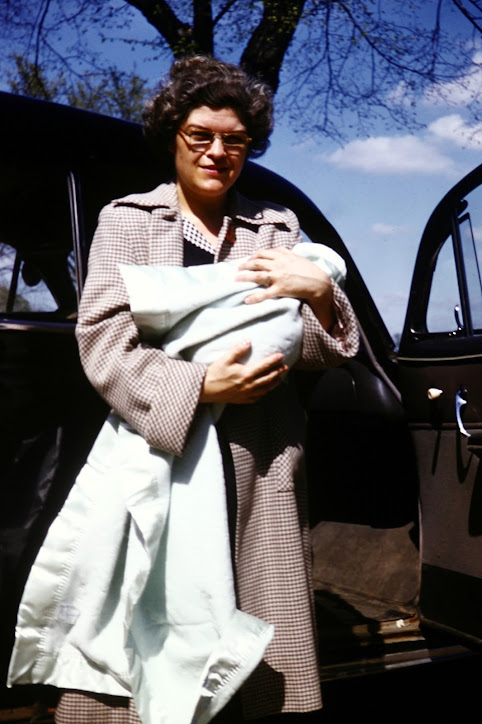
Mom brought me home from the hospital in September 1945


Perhaps the best quality to use to describe her is selflessness- she sacrificed her immediate happiness for others, especially our family. By the time our family settled in Lafayette, Indiana when I was 8, the family had moved 17 times. My Mom had 3 kids quickly and my Dad made little money at the University of Vermont Agronomy Department in the early 1940s and was on the road a lot. To save money we shared a farmhouse with a family, then moved to Burlington and rented a house to attend city schools. We then moved twice a year. My dad bought an “economic” camp on Lake Champlain for summer living, sublet the Burlington house, and then moved back in the fall in time for school. Mom was constantly packing and unpacking our meager family belongings, making do with a small amount of furniture which took a terrible beating with all the moving.

Through all the moves with 3 boys (later 4) and a girl, Mom adapted to increased laundry, food, and so many other roles so we kids could focus on education. I always had clean clothes for school and sports. She was an excellent cook, although not with seasoning like salt and pepper. She cooked nutritious meals with inexpensive ingredients, paid the bills, and handled all our school and other activities. I remember a man telling me at my mom’s funeral in 2007 that he remembered me playing Pony Colt baseball in large part because I always had the cleanest-looking uniform on the field. No complaints from Mom, just encouragement and selfless support (always positive, wise, and efficient- sometimes I wonder if she ever slept), and that played a huge part in determining our family attitude of hard work, education, and self-sufficiency. I have no doubt that had Mom not chosen to devote herself to her 5 children over a career she would have had outstanding career success.


Mom in Kitchen on Hitt Street


Mom was also selfless in helping others, whether through visiting the sick at homes or in the hospital, volunteering for a charity, or opening our home and treating so many others as a family. I remember Mom in the 1960s, while taking care of my 95-year-old grandfather at home, reaching out and connecting with foreign students at Purdue University, and being a host family for students from Thailand, Vietnam, Japan, and more. She invited them to join our family for all holidays and counseled, or encouraged us to counsel them about our culture. All these students stayed in touch with Mom for years afterward. In 1975, mom, at the request of a 1960s Vietnam host student, opened our home for a year to his wife’s relatives- 17 and 19-year-old Vietnamese girls driven out of Vietnam by the communists. They were refugees, spoke no English, ate different foods, and had no future as they were. Mom treated them as family, cooked meals for them, signed them up for English classes, and then Mom and Dad worked with Purdue to get them admitted and allow them to record, not attend, classes to avoid tuition costs. They were both diligent learners, got degrees (one Purdue, the other a business school), and moved to LA County where they got good jobs.

Houng & Twie Pham

Letters were a passion to my mom. When I went away to college and the Army, I got a letter from Mom almost every week. When I was in Vietnam and away from my family, the most treasured gift I received was the mail – a letter from home. Most of my days were filled with fear, loneliness, and disillusionment. Mom’s letters were from “The World”, they were an escape, allowing me an opportunity to temporarily remove myself from the war and enter into a dimension that is humane, friendly, and warm- a personal one with Mom and home. It was huge emotional support and relief from an unknown future. She was the only one that wrote me letters while I was in Vietnam and I remember feeling depressed if there was a mail call and I didn’t receive a letter.


Mom and Dad in Elk Rapids, MI

Mom died in 2007 knowing all of her children including the foreign students had done well. Under her direction, she maintained the pride that was so important to our family with Northeastern roots. Mom’s positive, encouraging, and selfless attitude, her wise planning, time management, and efficiency, even in the face of a huge life load, were the glue that kept our family connected and had the most positive impact on me of anyone in my life. She was an amazing woman!

Monday, January 20, 2025

Growing Up In Burlington, Vermont (1945-1953)


I was born on September 23, 1945, in Bishop Degoesbriand Hospital in Burlington, Vermont, and spent most of the first 8 years of my life in Burlington.


Mom bringing me home from the hospital 1945

My two older brothers, Warren (3 years older) and Steve (4 years older) were also born at that hospital. My father and my mother were both born in Maine, grew up during the Depression, and somehow both managed to graduate from the University of Maine but not without an extreme frugality that came from living through that era. My father had also received his master’s degree from the University of Maine and in 1945 was working for the Agronomy Department at the University of Vermont in Burlington, Vermont.  This is my story of those early years told primarily through the eyes of my older brother Warren.

Our family lived in houses near the University on School Street, Booth Street, Main Street, or elsewhere depending upon the amount my dad could negotiate for a year lease. In the summer he would try to sublease the house to students and we would move to our “Camp” on Spaulding West Shore on Lake Champlain, Vermont from June to August.


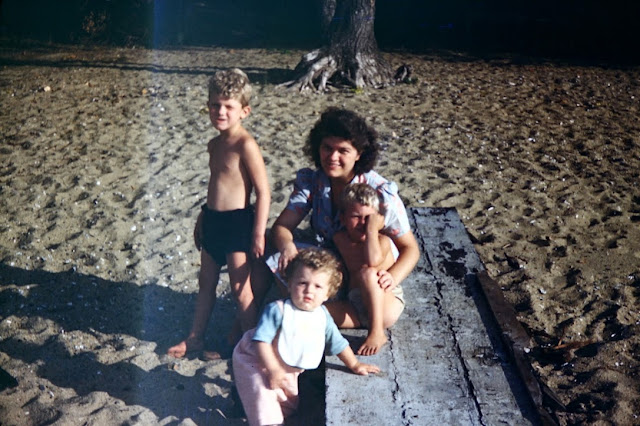
                        Steve, me, Mom, and Warren at Lake Champlain, Vermont 1946

If Dad could not sublet the house, he would give up his lease and we had to move all the furniture to the Camp and then back to town again when school started. He also had to find a place to stay until the next summer. When we finally moved to a permanent home in Lafayette, Indiana, it was the 19th move of the family.


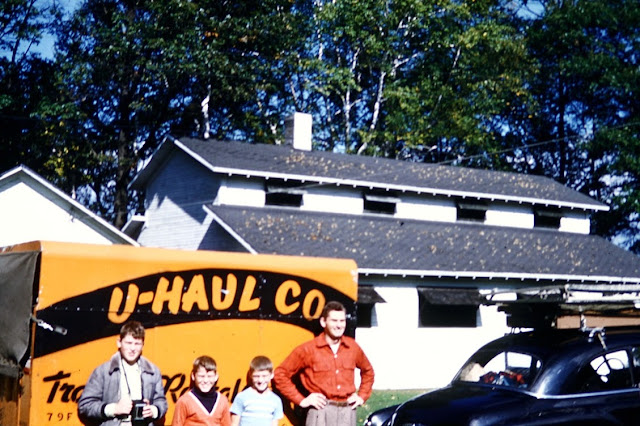
Steve, Warren, me, and Dad leaving the Camp in Vermont for Lafayette, Indiana 1953

Another house was on Main Street at the top of the hill just across the street from the University Infirmary. It was an older two-story duplex with each side having a basement and 2 floors. Behind us was a sorority and next door was the owner of our house Harry S. Howard. His dad was General Oliver Howard, a friend of President Lincoln, who had an illustrious career as a Union general in the Civil War, losing his right arm in battle and earning the Congressional Medal of Honor. He was named to run the Freedman’s Bureau following the Civil War. He realized blacks could not be integrated into American society unless they, among other things, had universities to attend for higher education. He founded Howard University and aided in the charter of Atlanta University, now Clark Atlanta University. He was an excellent negotiator and the Army sent him to negotiate major peace treaties in the West including with Geronimo and Chief Joseph. My brother Warren used to go over and visit with Harry Howard in his house which was full of Indian artifacts and proclamations lining his stairway signed by Lincoln and Grant. He died in Burlington and is buried there.

My brothers and I always sought ways to make some money.  We would go out with a wagon and collect paper, cardboard, and cans which we would flatten before putting them in the wagon. There was a scrap yard a few blocks from us that would give us ½ a cent a pound for the paper, which seemed like big money. Collecting bottles around construction sites gave us 2-cent deposits and milk bottles 5 cents. Snow storms were a great money maker and we would hit the neighborhood early charging at most 25 cents a walk. Most houses were close to the sidewalk. We had some customers who were regulars. If we got a few pennies in our pocket, there was an IGA store just a block away that sold penny candy. At some point, we had an allowance of 25 cents a week. Within walking distance were several movie theaters with the movie 12 cents with a 3-cent luxury tax. There always seemed to be a cowboy movie playing at least one of them starring Roy Rogers, Gene Autrey, Lash Larue, Hop-along-Cassidy, or the Lone Ranger that drew us in. If the candy and popcorn didn’t get the remaining 10 cents, the 5&10 Stores on the way home did. My brother Steve was the only one to bring home change to be saved.

My dad always sought ways to save money. He used a University camera for his work and always saved the last shots on the film roll to take pictures of us and get them developed at the University’s expense. When he traveled on the University expense account, he got a set per diem amount and always tried to stay with a farmer attending one of his field days or in the most reasonable rooming house in the area. The barber shop we went to was only about 6 blocks from our house and my dad would take all three of us along with him when we needed a haircut. He had a deal with the barber to give him a cut rate if he cut all of our hair. Across the street was the Nearly New Shop where my mom bought a lot of our clothes. This is where I got the name “Poor Peter”. The clothes were previously worn and then handed down from Steve to Warren and finally to me, Poor Peter, getting what was left of them.

The one time I remember him being a "big spender" was when he took the family on a train out of Burlington to Montreal, Canada to an Ice Follies show. We went to a pretty nice restaurant that had a tablecloth and menu. After the meal, I went running through the restaurant to him yelling, “Dad you left a quarter on the table.” He wanted to hide his head as it was a pretty cheap tip for the meal we had.

The University was a favorite place to go with the first stop at the Union Building. We went from end to end checking all the machine’s change returns to see if we could find a coin left behind. There was a university dairy that made wonderful ice cream as part of the training. There was a large gym with a track for winter running, basketball practice, and gymnastics equipment. There were greenhouses with a lot of different and exotic plants. It was really exciting to go to the University Farm about a quarter mile from the house as they would let us adopt a calf that we could feed after school.

Next to the University was Taft Elementary School where we went to school. The first-grade teacher Miss Fisher lived half a block away from us and my mom would make cookies for her and one of us would take them to her. She passed Steve on even though he could not read. He wanted to quit first grade. The second-grade teacher Mrs. South made Steve spend 2 years with her until he could read. Steve went on from there to become a Rhodes Scholar.

Taft School was a two-story school that had a gym and stage for various events. When the inner com came on with a march we would march down to the gym for the event. I remember one day hearing the music, going to the gym, being told to line up, and getting polio shots- all of us, no exceptions. Recess was always a big deal. The playground had big swings, a teeter-totter, and a Jungle Jim. Spring was for digging holes in the ground with your heel by pounding it down and spinning around. This was in preparation for shooting marbles to it. We were all proficient at this game and Warren still has a small suitcase full of our winnings. Winter time was for rolling large snowballs to make forts and then planning raids on another class's fort with a snowball attack.

Saturday, January 18, 2025

My Family (1940's-1960's)


These are some family experiences I had growing up in Burlington, Vermont, and Lafayette, Indiana. In the late 1940s and early 1950s in Burlington, my Dad didn’t think he made enough money at the University of Vermont to buy coal to burn in our home furnace, except during the coldest months. The rest of the time he burned wood, which was like throwing newspaper in the furnace- it burned quickly. My grandfather Smith came to stay with us in winter months and I think he spent a large amount of that time throwing wood in the furnace.

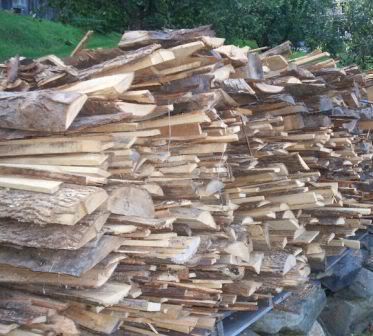
It would be early on a fall Saturday morning when we would hear my dad yell up the stairs "Boys get up we need to go get slabs”. My older brothers Steve, around 9 years old, Warren, 8, and I, 5, would shutter awake and drag ourselves out of bed to join my dad to go get slabs. A slab is a piece of wood that is sawed off a log first at a sawmill. It has one rounded face where the bark is and one flat-sawn face. It is not edged and is usually available in 8-foot lengths for sale as firewood. It needs to be cut into furnace-length pieces. A sawmill would pile these up for sale to people like my dad. Coal was $20/ton and slab wood was $2-3/per truckload.


 Slabs

The first stop was the University of Vermont experimental arm near Burlington to borrow a University-staked bed truck. We would all squeeze in the front seat and off we would go to the nearest sawmill. One of the sawmills had the slabs already cut and sitting in a hopper. You could drive under it, pull a chain that would open up the bottom, and drop the cut slabs filling the truck. It cost a dollar more to get the slabs this way and Dad figured he got more slab lengths by packing them into the truck by hand from the big uncut pile. When we got the truck loaded, it was a return trip back to the experimental farm where they had a makeshift circular saw with a cradle powered by a leather belt off a tractor power takeoff.


 Firewood Saw 1940’s

All the slabs had to be unloaded and piled by the saw and one of us had to hand them to Dad. On the other end was another son to pick up the cut-offs and throw them up into the truck to be stacked again by the third son. We were off to home where we threw them down a coal chute window into the coal bin. Grandpa Smith was down there piling them up. By this time our hands were full of splinters and covered with fresh sticky pitch. We would keep watching the clock as it would be getting close to the downtown movie start time. Dad would finally give us our 25 cents each, then a quick wash up and a sandwich, and a race to the theater so we could also catch the cartoon before the movie.

Steve and Warren seemed to argue and fight a lot while we grew up. One time my dad had enough of the quarreling and went to a second-hand store and bought two sets of boxing gloves. He moved the furniture to the sides of the living room and let my older brothers box each other. Steve was taller with a longer reach so got in the early jabs. Warren was shorter but more athletic and got to Steve with some early body punches up close when all of a sudden my Mom came home, saw the spectacle, and started screaming. That was the end of my dad’s boxing parenting experiment.

We moved to Lafayette in 1953 and Steve and Warren were both in the 7th grade and still had not made peace. One day when Steve was in the bathroom for, in Warren’s view, too long, Warren went in and they started fighting. I was in the hallway and heard the fight. They mostly wrestled in a very confined space, cracking some tiles and furniture, until finally they stopped. My brother Warren told me they said to each other that the fighting wasn’t resolving anything and that was the last fight they ever had. They got along after that.

During this growing-up period, my brothers Steve, Warren, and Greg and my 
sister Laurie, and I looked forward to family slideshows. In the 1940s into the 1970s, my Dad took thousands of photos, most of which were slides for work. He always saved the last 4 or 5 photos on a film roll for family photos capturing our life as a family- holidays, activities around the home, the Camp, trips visiting family. It was our life in Burlington and Lafayette.

It is hard for us now to imagine the significance of the family slide show. It became a way to gather the family together. Since my childhood, we’ve evolved through TVs, VHS/DVD/Blu-ray players, and now streaming to watch whatever we want on TV with whoever is around. So the novelty of “gathering around” is gone. And with a smartphone in hand, most people look at photos quietly, in isolation- sometimes sharing them with friends and family via text messages or social media.

But the 1950s/60s slide show was more than just a way for a family to gather to look at photos. There was something magical about it. It started with everyone viewing one image at a time- together. When you are by yourself and look at a photo, it triggers memories, you think of things, but you stay quiet. On the other hand, when you are watching a slideshow with others, you still think about those memories, but it is out loud. Reactions are together, triggering other comments and stories - making the moment much richer and often more satisfying. That is something that cannot happen with a set of prints or even showing photos to more than one person using your smartphone.

Every couple of months my dad on a Saturday night would say, “I have a new box of slides. After dinner, let’s set everything up.” The anticipation, the excitement!  I loved the things we did to get the slide show gear set up and ready to go like unfolding the tripod-legged screen, getting chairs ready, closing drapes, and telling everyone to come in.

When it was set up and the family was assembled (as they all wanted to be a part of it), the room lights went off, and the projector came on.

My dad operated the projector and was in control of how the show would go. He knew the order of the slides and what photo was next and often would provide a brief preamble about what we were all about to see. And then when the photo appeared we would react with laughter or sometimes sighs, shock, or even awe. Here is a favorite-


                             One-legged Mom early 1940's

The point is that everyone was focused on that one image and the conversation that followed dove deeper into what it was that the photo had captured. This conversation often cascaded into other connecting memories and stories. Everyone was participating and loving it. What made it so neat was there was no sound in the photos. Instead, we were providing the sound- the commentary. During this time I never heard Dad say I love you. Looking back I don’t feel his lack of emotional words meant no love. His way of showing his love for us was through his acts like the slideshows that showed his care for us. The memories are now almost visceral.

Growing up there were some family days of hard, dirty work, some intense sibling rivalry, and some immersive bonding. All in all, it was a childhood with memories I treasure and ones that have helped sustain our family cohesion and caring to this day.


Thursday, January 16, 2025

First Greyhound Bus Trip 1953


When I was 7 in the summer of 1953, I took a Greyhound bus trip with my 10-year-old brother Warren that is seared into my brain. The trip was part of a plan my dad hatched to transport our family of 7 from Indiana to Vermont where we then lived. He had been meeting his colleagues and house-hunting in Indiana for a new job to start in October. My mom had just given birth to my younger brother Greg, was weak, and about to need a hysterectomy so my dad was under a lot of stress.

The family car could handle only 5 with the new baby for the Vermont trip so he decided to send my brother Warren and me by bus. Two daughters of a colleague were going to Boston and they agreed to accompany us by bus to Boston, then put us on a bus to Vermont. When we got to the Indianapolis bus station my d
ad saw the direct trip to Vermont was a different bus from the girl’s bus and on the spot decided to buy us a direct ticket to Vermont. He gave my brother $5 for food and told him to look after me.

We boarded the bus in mid-afternoon and got off the bus in Cleveland at about 7 p.m. to transfer to a bus to Schenectady, which was to leave at 2 a.m. My brother checked with the bus clerk every 20-40 minutes if the bus had arrived. He was in constant fear we would miss it so he never slept. I slept a little. We sat on hard oak benches and I began 30 hours of asking for food. My brother said repeatedly to me we needed to save our money because it would be needed later for food. I ended up in Cleveland with one candy bar. We went to the upstairs bathroom only once because a drunk was in it and he offered us a drink from his bottle.

We got on the bus at 2 p.m. and got off at Schenectady around breakfast time. He finally, after my continuing hunger pleas, bought me an apple, some juice, and crackers. After waiting a long time, we got on another bus and arrived in Burlington at about midnight. My brother had not slept fearing we would get left behind or miss our bus transfer. We changed buses again and got on the Essex Junction bus- where my uncle lived. The bus was full of drunk Air Force airmen and they exited at Fort Ethan Allen. The driver said since this was the last bus it was turning around.

We got off and went to the guard house. My uncle was a captain stationed there but off duty so the guard called my aunt who picked us up and drove us the 10 miles to Essex Junction, arriving there about 2:00 pm. She called my dad, who had not told my mom of our unaccompanied trip, and that was our only contact with him since leaving Indianapolis.

My aunt fed us and my brother slept at least 12 hours. My brother had about $2.50 left over.

Tuesday, January 14, 2025

The Car Accident 1954


It was July 1954 in Indiana, the corn in the fields around my hometown of Lafayette, Indiana was high, and my older brother Warren, then 12 years old, was playing on the Little League All-Star team in a regional tournament in Logansport, Indiana.  I was 8.  Multiple cars were taking the team to Logansport, including me as a spectator.  The Agricultural County Agent my dad was working with that day was going to drop him off in Delphi, Indiana, so one of the cars could pick him up and take him to the game. Dad never made it to Delphi.

Dad and the County Agent were almost to Delphi when they came to a crossroads with corn growing right up to the road edge on each corner, which was common in Indiana. Dad’s driver had stopped at the corner and started to cross the intersection when out of nowhere a car hit them broadside on Dad’s side of the car.  In that car were a couple of ladies who were trying out a new car with a car salesman, and they had blown through the intersection. This was a time of no seat belts and Dad flew out of the car, went through a barbed wire fence, and hit his head on a large rock. He was in serious shape and unconscious. 

My brother remembers at the time being just south of Delphi when the car he was in met an ambulance traveling south toward Lafayette at a high rate of speed with flashers and sirens howling.  He remembers a remark made that someone was in serious trouble, not knowing at the time it was our dad.  We went on to the game and when we got there my brother noticed a stillness around him and a lot of people looking at him. The coaches and team had been told what had happened and they did not want to tell him and upset his play.   The problem was the whole team was upset.  They were favored to win but played the game out of sorts.  A routine fly ball would drop between outfielders, players didn’t concentrate.  The whole game was like that and Lafayette lost.   Following the game, the coach said he needed to talk to my brother, took him aside to tell him my dad had been in an accident, and told him he would take us straight home. I either overheard that conversation or was told separately.  We still had not put the ambulance and accident together.

When we got home there were some neighbors there, Mom was at the hospital, and it was pretty somber. When Mom came home, she was pretty upset as the doctors had told her there was a good chance Dad would not make it. Going through the barbed wire fence ripped up his face with his scalp cut front to rear and hanging off to one side. He ended up with over 90 stitches in his face and head. When he hit the ground and his head hit a rock, it cleaved off a little of the skull in the back, and the hair never grew back. He had broken ribs, one arm, and a lot of deep bruises. The doctors told my mom she should go home and get out all our life insurance policies and get our finances in order. Mom let the neighbors know what was going on.  They saw the traffic at our house. 

A neighbor who lived across the street called Mom to tell her they had contacted a registered critical care nurse they knew who had a lot of experience in these kinds of cases. While we never knew for sure, the neighbor paid for the nurse.  The nurse agreed to go to the hospital to see what she could do for Dad. This made Mom feel a lot better, although she was still calling the bank and insurance companies.  He was also still unconscious, but every day he lived increased his chances of survival. My brother Warren believes the special nurse stayed a few days straight sleeping in Dad’s room. Everyone involved feels the nurse saved Dad’s life. Dad was unconscious for 30 days and by the time he woke up his bones had healed, the stitches had done their work, and he didn’t feel anything from the bruises.

During this period of time, the women at church and the Purdue Agronomy Department where my dad worked had organized a food brigade and we never ate better. We found out then that people who bring you food only bring the best thing they are known for.  Volunteers washed the dishes, and clothes and vacuumed the house so Mom could spend time at the hospital, although she was not able to talk with Dad. 

Warren and my oldest brother Steve had started junior high school, I was in elementary school, my sister Laurie was 5 years old and my youngest brother Greg was not yet a year old.  We never realized how desperate a situation the family was in those first few weeks following his accident.  I remember during that time sitting outside the house backdoor with a hammer slowly chipping a concrete block.  My mom and my aunt opened the door and asked me what was wrong.  I remember asking what would happen to me and seeing my mom turn very sad, although overall she was very stable and in control throughout the ordeal. 

When Dad finally regained consciousness, he had a problem the doctors thought might be serious. He was seeing double and thought he was still in Vermont. He kept asking where the nurses were from and could not understand why they were not French-Canadian nurses like in Vermont. I am not sure he ever had a recollection of the accident and how badly he had been injured. A neurosurgeon was brought in from Indianapolis to look Dad over for brain injuries and, in the process, he needed to take a sample of spinal fluid. As soon as the spine was tapped, Dad’s double vision reversed and his knowledge of the surroundings got better. The surgeon said there was nothing for him to do at this point other than let him recover.

By this time, Dad’s medical leave days off from Purdue had expired and his boss came to the hospital to see Dad calling it consulting. When Dad was finally on his feet his boss put a roll-away bed in Dad’s office where he could lie down. Mom would take him to work and pick him up and he would rest a lot in his office. His secretary screened a lot of his calls getting back to those calling with a short answer. Of course, everyone he worked with by now had heard about the accident. We don’t remember if anyone else in Dad’s car or the other car was also hurt in the accident. We never did hear from the ladies that hit Dad’s car, but that was probably on the advice of their attorney. At first, when Dad got home from the office he had to lie down, but enjoyed the food that was still coming in. He slowly gained his strength back and was able to enjoy his family again making pretty much a full recovery. 

As I look back, I realize how different my family’s life would have been had my dad died in the accident.  As it was my dad continued to work at Purdue for over 20 years and was able to have an enjoyable retirement, living to 97 years old.  My dad outlived a number of his insurance policies and the companies paid him off on the full acquired value.    


Sunday, January 12, 2025

My Big Game 1957


I grew up in Lafayette, Indiana in the 1950s. It was a baseball town in those days. In 1949 a Little League team from Lafayette played in the first Little League World Series in Williamsport, Pennsylvania. A Class D minor league baseball team for the Boston Red Sox was based in Lafayette.

I had a passion for baseball. My older brother Warren was a pitcher and in the spring of 1954 made the little league all-star team representing Lafayette. I tagged along and somehow managed to make the team at 8 years old. That season I sat on the bench for all 20 games, except for one at-bat in the last game.

After that bench experience, I determined to work hard and improve my baseball skills so I could play in all the games. Once the winter faded in 1955, I started riding my bicycle all over Lafayette seeking out pickup baseball games with older kids. I also started a whiffle ball league with like-minded kids my age. Playing on my own and the little league team over the next two summers lifted my game.

By 1957 I had grown and was a pretty good little league pitcher and third baseman. My team was supported by a sports store called Deckers. Deckers competed with three other teams in the Boys American League, while the other side of town had four teams in the Boys National League.

Game attendance was always noisy, particularly for Deckers. The father of our best pitcher was a former Purdue University two-time All-American halfback. He sat right behind home plate and seemed to scream the whole game, mostly berating his son’s pitching, calling him a loser, and not being in the game mentally. No one ever challenged him. As teammates, we cringed at the criticism but said nothing. Later in junior high his son froze on his first football kickoff return and never played football again.

The local Lafayette Journal & Courier newspaper had a reporter regularly check our 20-season games, writing weekly articles about the games, including box scores and key game plays. My mother read the sports page every day and kept clippings of any reference to my play.

On August 10, the paper announced the batting order and lineups for the city championship of Boys Major League Baseball that evening between Deckers and the Boys National League champ Savings. The August 11 paper article described the game as very close, with Savings leading 2-1 going into the bottom of the last inning for Deckers’ last at-bat. The first two batters grounded out. The next two batters doubled and tripled, tying the score 2-2. I then came up to bat and the article read ” Pete Smith then became the ‘man of the hour’ as he rammed a double over the centerfielder’s head to score the winning run.” I remember feeling an intense elation as my teammates hugged me, yelling along with the crowd.


                                            My big game 1957

I consider Lafayette my hometown in large part because of my big game, and later games in summer leagues and high school. Baseball gave me identity, focus, and good memories during my socially clumsy junior high and high school days in Lafayette.


Lafayette little league field in Murdock Park 1957