These are some family experiences I had growing up in Burlington, Vermont, and Lafayette, Indiana. Many of the Burlington memories come from stories my older brother Warren shared with me over the years.
In the late 1940s and early 1950s in Burlington, my dad didn’t think he made enough money at the University of Vermont to buy coal to burn in our home furnace, except during the coldest months. The rest of the time he burned wood, which was like throwing newspaper in the furnace- it burned quickly. My grandfather Smith came to stay with us in winter months and I think he spent a large amount of that time throwing wood in the furnace.
It would be early on a fall Saturday morning when we would hear my dad yell up the stairs "Boys get up we need to go get slabs”. My older brothers Steve, around 9 years old, Warren, 8, and I, 5, would shutter awake and drag ourselves out of bed to join my dad to go get slabs. A slab is the outer curved portion of a log removed at a sawmill. It was inexpensive firewood, and my dad bought truckloads of it because coal cost much more.
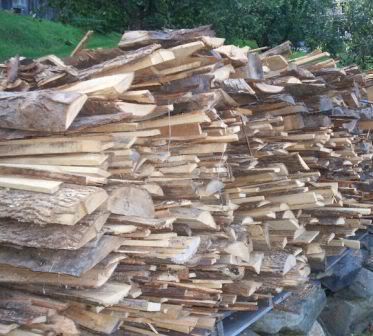
The first stop was the University of Vermont experimental arm near Burlington to borrow a University-staked bed truck. We would all squeeze in the front seat and off we would go to the nearest sawmill. One of the sawmills had the slabs already cut and sitting in a hopper. You could drive under it, pull a chain that would open up the bottom, and drop the cut slabs filling the truck. It cost a dollar more to get the slabs this way and Dad figured he got more slab lengths by packing them into the truck by hand from the big uncut pile. When we got the truck loaded, it was a return trip back to the experimental farm where they had a makeshift circular saw with a cradle powered by a leather belt off a tractor power takeoff.

All the slabs had to be unloaded and piled by the saw and one of us had to hand them to Dad. On the other end was another son to pick up the cut-offs and throw them up into the truck to be stacked again by the third son. We were off to home where we threw them down a coal chute window into the coal bin. Grandpa Smith was down there piling them up. By this time our hands were full of splinters and covered with fresh sticky pitch. We would keep watching the clock as it would be getting close to the downtown movie start time. Dad would finally give us our 25 cents each, then a quick wash up and a sandwich, and a race to the theater so we could also catch the cartoon before the movie.
Steve and Warren seemed to argue and fight a lot while we grew up. One time my dad had enough of the quarreling and went to a second-hand store and bought two sets of boxing gloves. He moved the furniture to the sides of the living room and let my older brothers box each other. Steve was taller with a longer reach so got in the early jabs. Warren was shorter but more athletic and got to Steve with some early body punches up close when all of a sudden my Mom came home, saw the spectacle, and started screaming. That was the end of my dad’s boxing parenting experiment.
We moved to Lafayette in 1953 and Steve and Warren were both in the 7th grade and still had not made peace. One day when Steve was in the bathroom for, in Warren’s view, too long, Warren went in and they started fighting. I was in the hallway and heard the fight. They mostly wrestled in a very confined space, cracking some tiles and furniture, until finally they stopped. My brother Warren told me they said to each other that the fighting wasn’t resolving anything and that was the last fight they ever had. They got along after that.
During this growing-up period, my brothers Steve, Warren, and Greg and my sister Laurie, and I looked forward to family slideshows. In the 1940s into the 1970s, my Dad took thousands of photos, most of which were slides for work. He always saved the last 4 or 5 photos on a film roll for family photos capturing our life as a family- holidays, activities around the home, the Camp, trips visiting family. It was our life in Burlington and Lafayette.
It is hard for us now to imagine the significance of the family slide show. It became a way to gather the family together. Since my childhood, we’ve evolved through TVs, VHS/DVD/Blu-ray players, and now streaming to watch whatever we want on TV with whoever is around. So the novelty of “gathering around” is gone. And with a smartphone in hand, most people look at photos quietly, in isolation- sometimes sharing them with friends and family via text messages or social media.
But the 1950s/60s slide show was more than just a way for a family to gather to look at photos. There was something magical about it. It started with everyone viewing one image at a time- together. When you are by yourself and look at a photo, it triggers memories, you think of things, but you stay quiet. On the other hand, when you are watching a slideshow with others, you still think about those memories, but it is out loud. Reactions are together, triggering other comments and stories - making the moment much richer and often more satisfying. That is something that cannot happen with a set of prints or even showing photos to more than one person using your smartphone.
Every couple of months my dad on a Saturday night would say, “I have a new box of slides. After dinner, let’s set everything up.” The anticipation, the excitement! I loved the things we did to get the slide show gear set up and ready to go like unfolding the tripod-legged screen, getting chairs ready, closing drapes, and telling everyone to come in.
When it was set up and the family was assembled (as they all wanted to be a part of it), the room lights went off, and the projector came on.
My dad operated the projector and was in control of how the show would go. He knew the order of the slides and what photo was next and often would provide a brief preamble about what we were all about to see. And then when the photo appeared we would react with laughter or sometimes sighs, shock, or even awe. Here is a favorite-

The point is that everyone was focused on that one image and the conversation that followed dove deeper into what it was that the photo had captured. This conversation often cascaded into other connecting memories and stories. Everyone was participating and loving it. What made it so neat was there was no sound in the photos. Instead, we were providing the sound- the commentary. During this time I never heard Dad say I love you. Looking back I don’t feel his lack of emotional words meant no love. His way of showing his love for us was through his acts like the slideshows that showed his care for us. The memories are now almost visceral.
Growing up there were some family days of hard, dirty work, some intense arguments, and some immersive bonding. We worked together, played together, argued, laughed, and shared experiences that became family stories told over and over again. All in all, it was a childhood with memories I treasure and ones that have helped sustain our family cohesion and they remain part of the glue that still connects our family today.
It would be early on a fall Saturday morning when we would hear my dad yell up the stairs "Boys get up we need to go get slabs”. My older brothers Steve, around 9 years old, Warren, 8, and I, 5, would shutter awake and drag ourselves out of bed to join my dad to go get slabs. A slab is the outer curved portion of a log removed at a sawmill. It was inexpensive firewood, and my dad bought truckloads of it because coal cost much more.
Slabs
The first stop was the University of Vermont experimental arm near Burlington to borrow a University-staked bed truck. We would all squeeze in the front seat and off we would go to the nearest sawmill. One of the sawmills had the slabs already cut and sitting in a hopper. You could drive under it, pull a chain that would open up the bottom, and drop the cut slabs filling the truck. It cost a dollar more to get the slabs this way and Dad figured he got more slab lengths by packing them into the truck by hand from the big uncut pile. When we got the truck loaded, it was a return trip back to the experimental farm where they had a makeshift circular saw with a cradle powered by a leather belt off a tractor power takeoff.
Firewood Saw 1940’s
All the slabs had to be unloaded and piled by the saw and one of us had to hand them to Dad. On the other end was another son to pick up the cut-offs and throw them up into the truck to be stacked again by the third son. We were off to home where we threw them down a coal chute window into the coal bin. Grandpa Smith was down there piling them up. By this time our hands were full of splinters and covered with fresh sticky pitch. We would keep watching the clock as it would be getting close to the downtown movie start time. Dad would finally give us our 25 cents each, then a quick wash up and a sandwich, and a race to the theater so we could also catch the cartoon before the movie.
Steve and Warren seemed to argue and fight a lot while we grew up. One time my dad had enough of the quarreling and went to a second-hand store and bought two sets of boxing gloves. He moved the furniture to the sides of the living room and let my older brothers box each other. Steve was taller with a longer reach so got in the early jabs. Warren was shorter but more athletic and got to Steve with some early body punches up close when all of a sudden my Mom came home, saw the spectacle, and started screaming. That was the end of my dad’s boxing parenting experiment.
We moved to Lafayette in 1953 and Steve and Warren were both in the 7th grade and still had not made peace. One day when Steve was in the bathroom for, in Warren’s view, too long, Warren went in and they started fighting. I was in the hallway and heard the fight. They mostly wrestled in a very confined space, cracking some tiles and furniture, until finally they stopped. My brother Warren told me they said to each other that the fighting wasn’t resolving anything and that was the last fight they ever had. They got along after that.
During this growing-up period, my brothers Steve, Warren, and Greg and my sister Laurie, and I looked forward to family slideshows. In the 1940s into the 1970s, my Dad took thousands of photos, most of which were slides for work. He always saved the last 4 or 5 photos on a film roll for family photos capturing our life as a family- holidays, activities around the home, the Camp, trips visiting family. It was our life in Burlington and Lafayette.
It is hard for us now to imagine the significance of the family slide show. It became a way to gather the family together. Since my childhood, we’ve evolved through TVs, VHS/DVD/Blu-ray players, and now streaming to watch whatever we want on TV with whoever is around. So the novelty of “gathering around” is gone. And with a smartphone in hand, most people look at photos quietly, in isolation- sometimes sharing them with friends and family via text messages or social media.
But the 1950s/60s slide show was more than just a way for a family to gather to look at photos. There was something magical about it. It started with everyone viewing one image at a time- together. When you are by yourself and look at a photo, it triggers memories, you think of things, but you stay quiet. On the other hand, when you are watching a slideshow with others, you still think about those memories, but it is out loud. Reactions are together, triggering other comments and stories - making the moment much richer and often more satisfying. That is something that cannot happen with a set of prints or even showing photos to more than one person using your smartphone.
Every couple of months my dad on a Saturday night would say, “I have a new box of slides. After dinner, let’s set everything up.” The anticipation, the excitement! I loved the things we did to get the slide show gear set up and ready to go like unfolding the tripod-legged screen, getting chairs ready, closing drapes, and telling everyone to come in.
When it was set up and the family was assembled (as they all wanted to be a part of it), the room lights went off, and the projector came on.
My dad operated the projector and was in control of how the show would go. He knew the order of the slides and what photo was next and often would provide a brief preamble about what we were all about to see. And then when the photo appeared we would react with laughter or sometimes sighs, shock, or even awe. Here is a favorite-
One-legged Mom, 1944
The point is that everyone was focused on that one image and the conversation that followed dove deeper into what it was that the photo had captured. This conversation often cascaded into other connecting memories and stories. Everyone was participating and loving it. What made it so neat was there was no sound in the photos. Instead, we were providing the sound- the commentary. During this time I never heard Dad say I love you. Looking back I don’t feel his lack of emotional words meant no love. His way of showing his love for us was through his acts like the slideshows that showed his care for us. The memories are now almost visceral.
Growing up there were some family days of hard, dirty work, some intense arguments, and some immersive bonding. We worked together, played together, argued, laughed, and shared experiences that became family stories told over and over again. All in all, it was a childhood with memories I treasure and ones that have helped sustain our family cohesion and they remain part of the glue that still connects our family today.