Wednesday, December 11, 2024

My Wife, Fang-Chuoh "Vicki" Liu

Vicki's life began with courage long before she was born. Her parents came from China during one of the most difficult periods in modern history. Her father had been a high-ranking officer in the Republic of China Army and, in 1949, as communist forces took control of the mainland, he and his family were forced to evacuate to Taiwan. They carried with them little more than hope, faith, discipline, and the traditions they cherished.

Vicki came from a large and loving family. She had four sisters and three brothers; the elder five of her siblings were born in China before the family’s evacuation to Taiwan. The family’s experiences through war, displacement, and rebuilding their lives created strong bonds among them and instilled in them deep loyalty to family and tradition.  And they are a highly articulate and expressive family who bring a great deal of conviction and enthusiasm to their discussions.

Vicki, Her Parents, Brothers, and Sisters in Taiwan During the Mid-1960s

(Vicki Second Row, Second From Right))

In 1957,Vicki was born at home in Taipei, Taiwan. She grew up in a family shaped by sacrifice, resilience, and strong values. From an early age, she showed the intelligence, kindness, courage, and quiet determination that would define her entire life.


Vicki at Age 12 in Taipei at Taiwan University, 1969

She studied hard and graduated from college in Taipei with a degree in nutrition, a field perfectly suited to her caring nature and desire to help others.

In the early 1980s, she bravely came to America to continue her education, earning her master’s degree at Texas Woman’s University in Denton, Texas. Like many immigrants, she faced the challenge of building a new life far from home, but she did so with dignity, strength, and grace.

Vicki married in Taiwan and later settled in America, where she devoted herself to her family. She became the loving mother of her daughter, Crystal, and her son, Edwin. Her life was filled with both joy and hardship. In 2005, while living in Cypress, California, she lost her husband to cancer. Through grief, she remained steadfast for her children and continued to care deeply for those around her.

Her professional life reflected her extraordinary compassion and dedication. Vicki became the first neonatal dietitian at Children’s Hospital Los Angeles, helping pioneer specialized nutritional care for fragile newborns and premature infants. Later, in the 2000's she  began work in the neonatal intensive care at Miller Children's Hospital which is part of the Memorial Healthcare system where she became deeply respected for her knowledge, patience, and devotion to the babies and families she served. 

In 2014, our paths crossed in Cypress. From the beginning, I saw in her a remarkable woman — intelligent, compassionate, principled, deeply faithful, and wonderfully devoted to the people she loves. Her Christian faith guides her life and gives her a strong moral foundation. She is loyal and selfless toward her children, her siblings and their families, her friends, and toward me. She feels life deeply — with tenderness, empathy, warmth, fierce love, and passionate and challenging debate.

We married in 2017. It was the second marriage for both of us, and together we found a love built not only on romance, but on trust, companionship, faith, and deep devotion. We laugh together, comfort one another, and face life hand in hand, communicating when conflicts arise. We are both imperfect people but through her emotional intensity she helped develop my introvert personalty, helping me appreciate emotional connection.  After all the years, struggles, losses, and journeys that brought us together, we remain profoundly grateful for the life we share.

Tuesday, December 10, 2024

The Balkans 2019

Watching reports from modern conflict zones often reminds me how little I understand about forces that drive people into war. That curiosity has followed me throughout my life and was one reason my wife and I traveled through the Balkans in 2019.


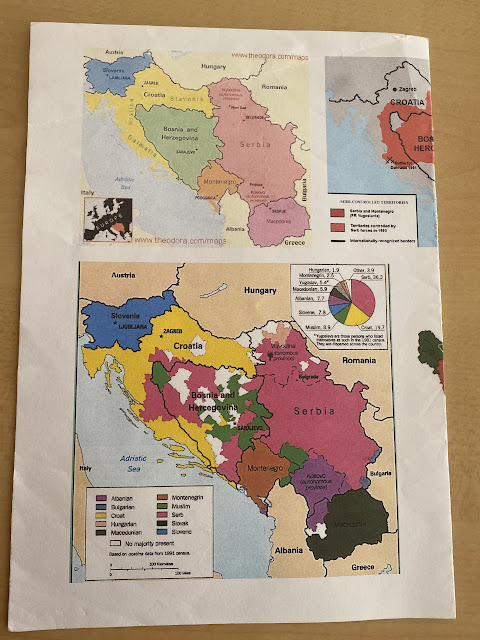
Maps of Countries in the Balkans (Former Yugoslavia), 2019


The Balkans are six independent countries, including Croatia, Montenegro, Bosnia and Herzegovina, and Slovenia- all of which we visited.  During the tour, we learned a lot about the pain and sorrow of people who lived through the 1990s civil war there.  I still have difficulty understanding the conflict and depending on who you listen to - Croat, Muslim, or Serb- the story changes.  While there was resiliency in the people we met to seek a peaceful future, there was also an underlying pessimism about the precarious relations among the ethnic groups- predominantly the Roman Catholic Croats, the Orthodox Christian Serbs, and the Muslim Bosniacs.


On our tour, Croatia, Slovenia, and Montenegro had some spectacular natural wonders and cities. 


Map of Our May Balkans Tour, 2019


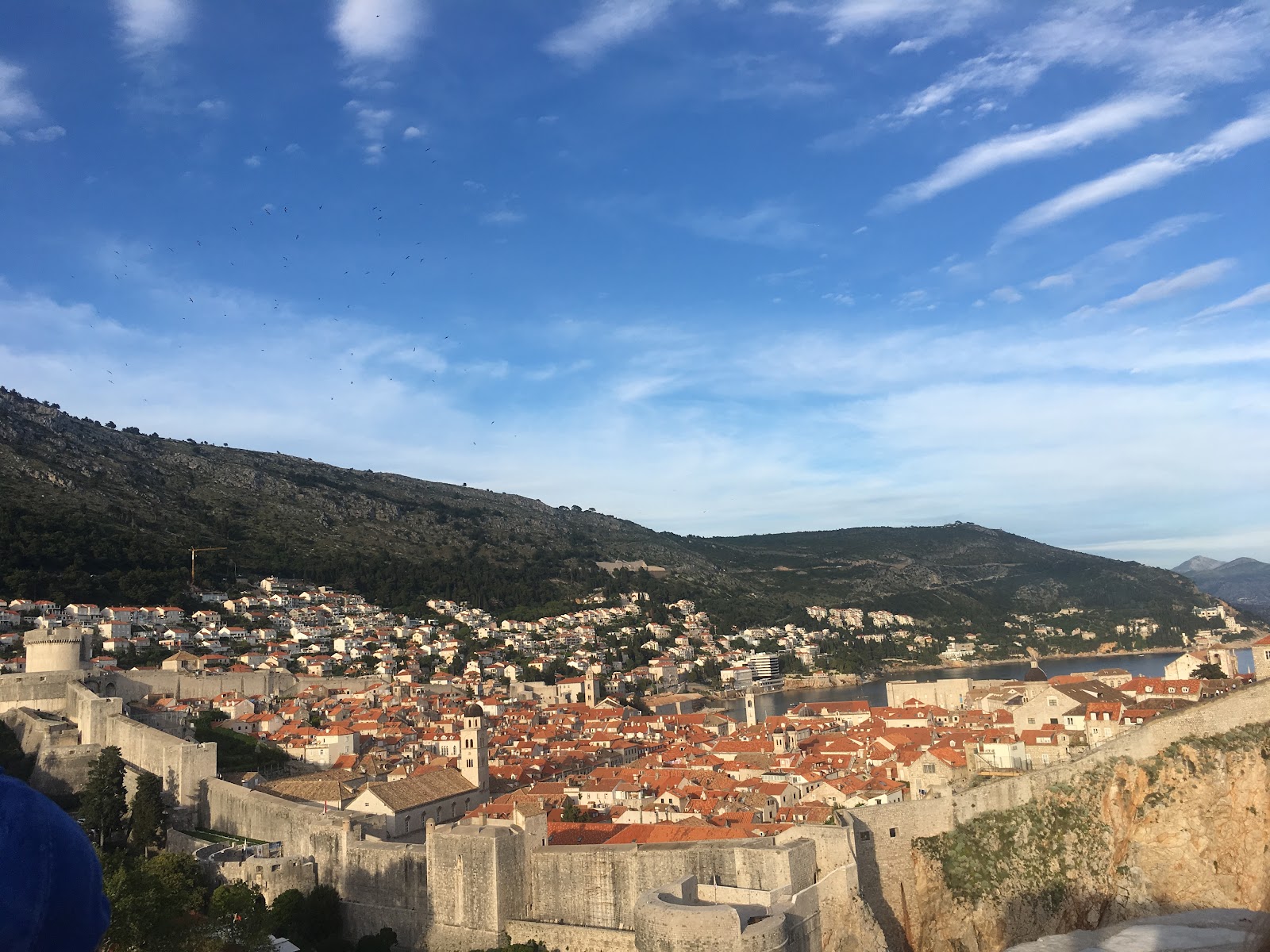
Bosnia and Herzegovina, on the other hand, was a sharp contrast which I feel is best described as a country of ethnic diversity and best known for its 1990’s civil war.  We started the tour in Dubrovnik, Croatia where steep hills plunge directly into the sea surrounding the walled 14th-century city. 


Dubrovnik May 2019


A speculative visual historical sight but also, as we learned, a city blockaded by sea and shelled from the overlooking hills for seven months by the Serbs in 1991-1992.  As with Ukraine, I still do not understand much of the history behind the former Yugoslavia conflict.  What I do know is a sense of the depth of feelings of some of the people involved in the war.  There are still unrepaired holes in city pavement and damaged city walls with identifying signs as reminders of the shelling.  Our Croatian tour guide described the damage and deaths caused by the shelling and the daily seven months of deprivation and fear of the city population.  Our tour bus then went to the area overlooking Dubrovnik where the Serbs shelled the city.  The artillery bombardment of Dubrovnik, especially the historic old town, had no concern for human life or for the destruction of priceless cultural heritage that occurred in the process.


After a short day trip to Montenegro, the bus headed through Bosnia and Herzegovina to the capital city Sarajevo.


Sarajevo Airport Tunnel During 1992-1995


The whole region we drove through seemed economically depressed, as did the people.  Sarajevo seemed in the news daily in the early 1990s as Ukraine is today.  A city of a half million people, it was under siege by the Serbs from April 1992 to February 1996.  More so than in Dubrovnik, there are monuments and museums to the civil war.  Museum displays have photos of women during the siege braving the bombardment by walking in the streets in dress clothes and makeup in defiance of the danger and risk.  Observing and listening to the local people talk about that period, I could feel pride still evident in their resistance to the Serbs.


 On our second day in Sarajevo, the tour was arranged for groups of six to visit the homes of local families for dinner.  We went to a 7th-floor apartment of a Muslim family with a teenage daughter.  The apartment building was about 20 floors of communist-era concrete.  The family had lived there through the siege.  The wife talked about the city and daily life in 2019 which seemed normal- work, school, and activities.  When I asked about the war, the mother immediately became very serious and without hesitation said she would never allow her daughter to marry a Serb.  Her memories of the bombardment, the deaths, the murders, and the rapes she attributed to the Serbs seemed bone-deep and still fresh.  She told us that during the siege a sniper from her apartment building began to shoot people in the area randomly.  Later the sniper, who sowed so much fear and death, was identified as a Serb, her college professor, who was a neighbor she knew and trusted.  Her trust in any Serb was shattered by that sniper.  When I asked her about the future, she said she felt that conflict and war were more likely than peace.  It felt like the city was still in a truce.


The next day my wife and I visited a museum in Sarajevo dedicated to the July 1995 genocidal killing by the Bosnian Serb army of over 8,000 Bosnian Muslim men and boys east of Sarajevo in the town of Srebrenica.  Before the massacre, the United Nations had declared the besieged enclave of Srebrenica a "safe area" under UN protection but UN troops on the ground and elsewhere did nothing to prevent the massacre- the museum tour guide said the UN “was useless.”


The Srebrenica massacre was no “heat of the battle” war crime.  The museum photos of and commentary about the victims of the Srebrenica massacre told a different story.  It was a story of systematic targeting and selection of Bosnian Muslim civilian men and boys for torture and ethnic cleaning.  To the victims of war crimes, there is no difference between the “heat of the battle” and systematic killing by soldiers.  


I believe that the lesson to be learned is that once the genie of war is released from the bottle those soldiers involved in war crimes may sincerely (but falsely) believe that what they did was right and obligatory.  There is no so-called “just war” for the soldiers who face a brutal reality on the battlefield once a war begins.  As for the Balkans, the memories of the civil war, which are passed down to the next generation, make it a tinderbox for a future European war.


What I brought home from the Balkans was not simply memories of beautiful scenery, historic cities, and friendly people. I came away with a deeper appreciation for how long the wounds of war can endure. Buildings can be rebuilt and economies can recover, but memories of fear, loss, betrayal, and violence often survive for generations. The Balkans taught me that peace agreements may end a war, but they do not always end the emotions that caused it.


Monday, December 9, 2024

Eulogy For A Special Friend Stan Sutliff 2020

There are people you work with or know for years that you never really connect with. There are others that you connect with as soon as you meet them and a few who become deep friends with whom you can discuss questions of life. I was lucky to find such a good friend for 30 years- Stan Sutliff. Stan suffered a heart attack on October 10, 2020, while surf fishing in Norfolk, Virginia, and passed away 12 hours later. The news shocked me a great deal and I felt a great loss. Writing a eulogy for Stan had a huge emotional impact on me. This is a story of my friendship with Stan and writing it has helped me come to grips with his passing.

Stan was a man I truly loved who helped teach me how to live life to the fullest; to seize the moment and live without regrets; and to find meaning, friendship, and adventure in moments that would otherwise pass by if I lived on autopilot. One of Stan’s favorite quotes was from the writer Hunter Thompson and it says a lot about Stan- 

"Life should not be a journey to the grave with the intention of arriving safely in a pretty well-preserved body, but rather to skid in broadside in a cloud of smoke, thoroughly used up, totally worn out, and proclaiming “Wow! What a ride!'."

I first met Stan in 1991 in St. Louis at a Saturday morning sports fellowship gathering which our minister had just started and participated in at our church. We were warming up for a basketball game and he made a backward trick shot from behind the foul line. My first impression of Stan was someone who made me laugh, someone with open, exuberant energy. He was a chemistry major with a marketing MBA, working in commercial intelligence. I soon got to know him better and learned we had both grown up in Indiana and shared many common experiences and interests, including graduating from Indiana University, serving in Vietnam, working for Monsanto Company, faith in God, a love of the outdoors, and discussing philosophical questions we never answered.

The church sports fellowship gatherings continued until I left St. Louis in 1996. Stan and I felt those gatherings were the most connected Christian times either of us ever experienced. Our group of 10-12 guys, all about the same age and demographics, became friends, competed in volleyball and basketball, studied the Bible, shared testimonies, and reached out to each other when one of us faced a life challenge. A highlight was when one of our group started a Crispy Crème Donut store and began bringing hot donuts to share after the sports. Not good nutrition but a great draw for attendance. His efforts to change to bagels were unanimously vetoed.

Stan and I did a 3-day float trip in southeastern Missouri in the spring of 1992 or 1993 by ourselves. We brought our Bibles and our lingering questions about life’s meaning. The locals didn’t seem to have those questions. I recall dinner in a one-bar town where we ordered steak and a single malt scotch drink and then at the bar table and through the cigarette smoke ate and studied our Bibles. I reviewed with Stan conflicting Biblical passages on free will and predestination and the enduring mystery of this and other paradoxes. He said it was an aha moment that challenged him and inspired him to question his Biblical knowledge. 

Stan was a marketing guy and naturally started socializing. He called me over to the pool table to introduce me to a tough-as-nails Illinois highway policewoman who was recovering from a line-of-duty gunshot wound. The next morning, windows open, CD blaring, we listened to a new age piano hit song on the way to the canoe put-in point. We pulled up next to an old pickup truck and a tough-as-nails young lady got out, got under the heavy canoe on top of the truck, pulled it off the truck, and carried it to the river. We said hi and she pointed to the guy collecting fishing gear from the truck and she said in a southern Missouri accent “He’s my husband. We just got married and are on our honeymoon.” 

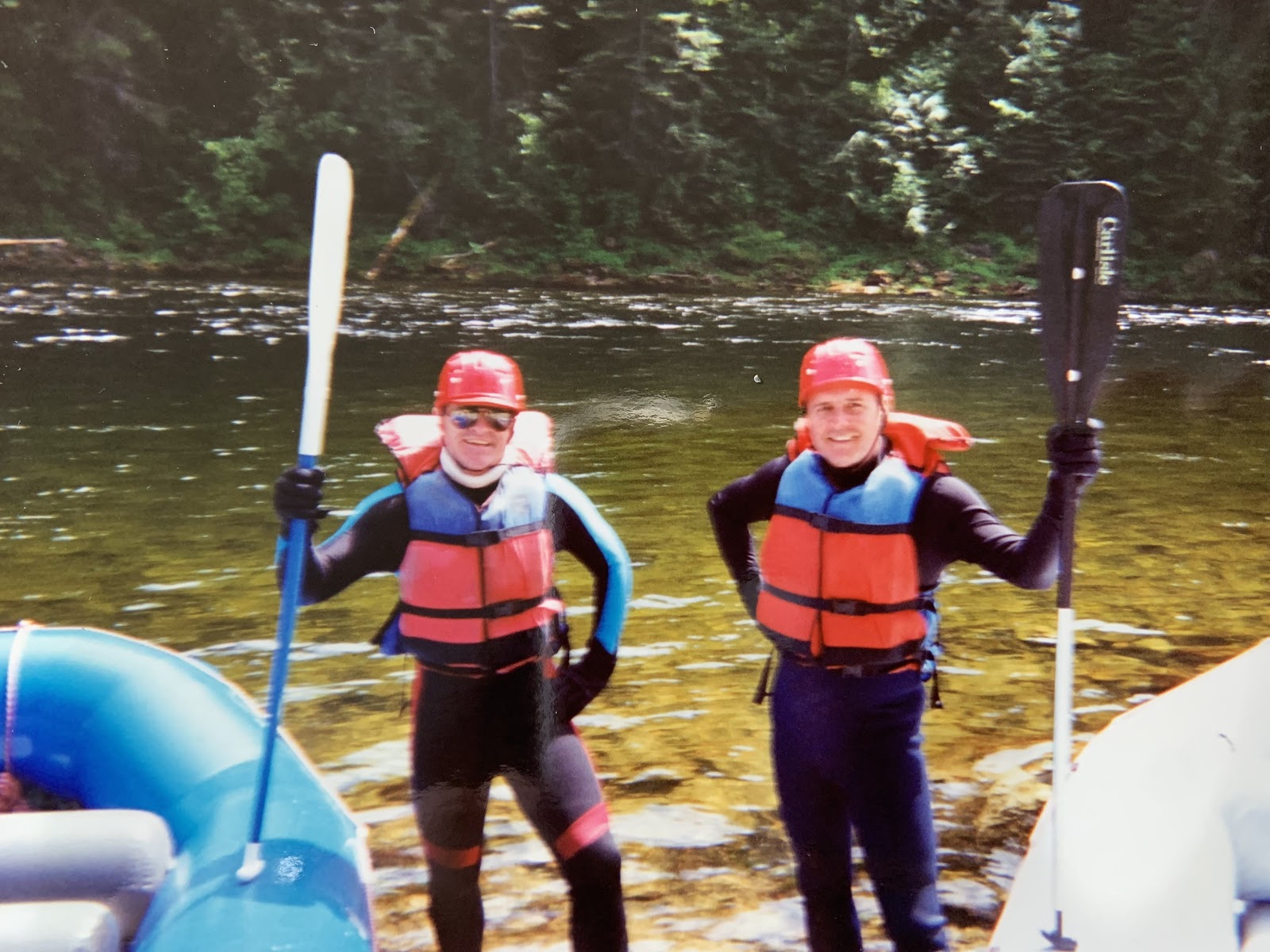
The next year we, as Stan said, “bit the bullet for crazy shit” and went on a 3-day, class V whitewater-rated float trip down the cold, death-defying Idaho Lochsa (Indian meaning crazy) River. Here is a photo of Stan and me in our protective gear just before our float trip.


My Special Friend Stan Sutliff and Me at Lochsa River, 1993 

On day 2 we had 6 “swimmers” from our rubber raft after the raft tipped over sending us through the Grim Reaper Rapid where a kayaker had been killed the week before. Stan finished the day with a Cuban cigar- kind of like a Milwaukee Best beer commercial that “It doesn’t get much better than this.” 

 I had audited several courses on ethics and apologetics at the Covenant Theological Seminary in St. Louis and continued to discuss those topics in depth with Stan. We both wanted to learn more about Christianity. Our minister at church happened to mention a Christian weekend retreat he was associated with called Cursillo. It’s a 3-day weekend of jokes, music, food, prayer, and a little theology to help participants develop a closer relationship with Jesus Christ. I attended and recommended it to Stan and he not only went but, as was his nature to throw himself wholeheartedly into his interests, volunteered for retreats. He later applied to study at Covenant Seminary, and studied at our church to become a Stevens ministry member, ultimately becoming a hospice caregiver. His later volunteer work as an MBA student mentor inspired me to do the same. 

Perhaps the most profound impact Stan had on my life was the day after I learned I had been downsized at Monsanto in 1995 and given 6 months’ notice to find another job. He met with me the next day and reinforced advice to never fall in love with your company and always be looking for your next job. I had been with Monsanto for 25 years and was ignorant about selling myself. He read my resume and said it would not attract interest and he helped me rewrite it to sell myself. He stressed that outplacement was a full-time job so I stopped going to the Company office and instead spent each day at the outplacement office creating, with Stan’s help, multiple resumes, cover letters, networks, and interviews. His analogy was that I was now a fisherman patiently casting my resume, adjusting to the feedback by changing my sales pitch to interest employers. Bottom line he taught me how to sell myself by communicating the quantifiable value I could add. Over the next 2 years I had, thanks to Stan, legal positions at four different companies and never missed a day of work. 

Even after years apart Stan and I picked up with each other where we left off. We could talk anytime on the phone about deep philosophical matters. We understood each other- no judgment, just seeking, always open to fresh ideas. He was special in my life and his memory will always be in my heart. One regret with Stan is that I didn’t follow up on his email reply to a social justice sermon I sent him about a month before he died. He said we needed some quiet personal time of discourse and maybe a bottle of scotch on both ends of the conversation. He concluded by saying- 

" Too bad we’re so far apart. One of the elements of life I miss most in Williamsburg is the lack of any contemporaries to routinely sit down with and discuss life issues."

I plan to celebrate Stan’s life on October 10th at 5 pm by raising a glass of scotch. May you Rest In Peace, my good buddy. 


Stan Sutliff- 1947-2020

Sunday, December 8, 2024

My Hearing Story (2014-2022)


By 2021 I could still hear sounds, but increasingly I could not understand words. Conservations became exhausting. I found myself asking my wife to accompany me to doctor appointments because I could not listen, think about what was being said, and remember it all at the same time. Hearing loss was slowly shrinking my world.

I lived my life until 2014 feeling I had good (or at least good enough) hearing even as the feedback I started getting from friends and my surroundings proved otherwise.   I was self-conscious and resistant to the idea of using assistive devices, feeling that hearing aids were too expensive, complicated, and uncomfortable and would make me look older.  But as I was having to constantly ask people to repeat themselves I realized that already made me seem old.  As a docent, I sometimes struggled to understand visitors' questions in crowded exhibit areas. I began worrying about embarrassing myself and gradually cut back my volunteer activities. I was also starting to withdraw from social group activities and isolating myself and knew that was not a good thing for a happy life.

Then I learned that the Veterans Administration covered hearing aids.  I promptly got an appointment with a VA audiologist at the Santa Ana Clinic.  She said my hearing loss was moderate in my right ear and slightly worse in my left.  I remember the appointment when I got my hearing aids.   I was able to hear people speaking all around me.  I also began hearing bicycle riders coming up behind me on the bike paths. 

Even using hearing aids I found the music very hard to hear. It was beginning to sound more like noise.  I couldn’t use my cell phone unless I used my hearing aid Bluetooth function or I put the phone on speaker and my wife carried on the conversation on my behalf.  In one-on-one conversations, I relied heavily on reading lips.  It was not something I was conscious of doing but as soon as someone looked away, wore a face mask, or it was dark and I couldn’t see their lips, I realized I was doing it.

My wife suggested I get a hearing evaluation by a hearing medical doctor she knew, Dr. William Luxford, at the world-renowned House Ear Clinic in LA.  He told me I had severe to profound hearing loss (10% word recognition) in my left ear and moderate hearing loss in my right ear (about 50% word recognition).  He was very optimistic I was an excellent candidate for a left ear cochlear implant or CI and said the surgery risk was small.  However, he said I did not qualify under Medicare guidelines for a CI because while my left ear qualified my right ear did not, so the CI surgery would cost me $30,000-$50,000.  He did suggest I have my hearing evaluated by the VA as they might have a different CI qualification.  I was evaluated by the VA in January 2022 and told I did not qualify- similar to the Medicare guidelines but could be re-evaluated in 6 months.

I began to think and learn about cochlear implants.  

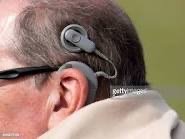
                                                          Photo of a Cochlear Implant Processor Above the Ear

Cochlear implants use a sound processor that fits behind the ear. The processor captures sound signals and sends them to a receiver implanted under the skin behind the ear. The receiver sends the signals to electrodes implanted in the snail-shaped inner ear (cochlea).

The signals stimulate the auditory nerve, which then directs the signals to the brain. The brain interprets those signals as sounds, though these sounds won't be just like natural hearing.

It takes time and training to learn to interpret the signals received from a cochlear implant. 

My mind started to go through a pro and con evaluation process.  CI surgery damages part of the ear and there is little or no residual hearing left which means that things like hearing aids will never work on the ear again, nor would I be able to take advantage of future stem cell or other technology that might require an intact ear.  Once I had CI surgery I would be deaf in that ear so there is no return if the CI fails.  And aesthetically the CI processor is visible above my ear.  

Then I began thinking of all the things I was missing.  I understood very little conversation in my left ear and would still have a hearing aid in my right or good ear.  Hearing loss meant less stimulation for my brain, but also more social isolation which is being linked more and more to cognitive decline. I had stopped going to church, working as a Docent at the Nixon Library, going to group events, and even limiting my bicycle riding for safety reasons.  My hearing made my conversations with my wife a constant source of frustration.  I was withdrawing from activities I loved. Conversations with my wife were becoming frustrated. I was becoming depressed and unhappy.  

What did I have to lose?  

Dr. Luxford had told me the longer I waited, the more my auditory nerve would deteriorate.  The better the nerve, the better I would do with the implant.  Plus the CI implant processor worn on the outside is constantly being improved.  I talked to several CI recipients and those conversations were very persuasive.  They could hear everything I couldn’t and their spouses were also very happy.  Visually the processors were about the size of a quarter and looked like a button.  I finally convinced myself that overall the hearing improvements a CI offered outweighed the surgery risk and other negatives of a CI.   I would be happy to assume the risks because the hearing improvements will be now and at my age time is of the essence.

In May 2022 I got Covid and tested positive for 11 days.  Studies are showing that long Covid affects smell and taste but only anecdotal information that it affects hearing.  In August the VA retested my hearing and my hearing loss since January was more than enough to qualify me for VA CI surgery.  When the VA told me in August 2022 that I now qualified for a cochlear implant, I felt both relief and apprehension. Relief that help was finally available and apprehension because I now had to decide whether to go through with the surgery. Finally, after waiting for a CI doctor appointment until December, the surgeon gave me a February 2, 2023 CI surgery date.

The VA audiologist asked me to choose from two CI manufacturers- Advanced Bionics and Cochlear Americas.  I determined both were good technology but based on conversations with CI recipients I felt more comfortable with Cochlear Americas.  They were the oldest and largest company, my stepson had a Cochlear Americas CI as did a relative from my wife’s family who wore a very small processor requiring no earpiece, which I liked.  Both were very happy with their CI so I chose Cochlear Americas. 

Looking back, I learned that pride and denial can delay needed change. The hardest part of hearing loss was not the inability to hear sounds- it was the gradual shrinking of my connections to other people.

I will talk about the CI surgery and rehab in a future story.


Saturday, December 7, 2024

My Hearing Rehab Story 2023

On March 5, 2023, after four weeks of recovery from cochlear implant surgery, I sat in a VA audiologist's office waiting for him to turn on my implant. I had spent months researching cochlear implants and wondering whether I was making the right decision. Now there was no turning back.  

A CI uses two primary parts. One part is surgically implanted into the inner ear and acts as a type of receiver and stimulator, sending electrical “sound” signals to the inner ear hearing nerve via implanted electrodes.  These signals stimulate the hearing nerve that sends the impulses to the brain where the electrical impulses are perceived as sounds. The second part of a CI is worn outside behind the ear. It contains a microphone and receiver, an antenna, and a speech processor. The transmitter and receiver both contain magnets that attract to each other to stay aligned and keep the two communicating across the intact scalp.

I had CI surgery on February 2, 2023, at the Long Beach VA Hospital.  It was a fairly routine outpatient surgery, lasted about an hour, and was performed under general anesthesia.  The surgeon made a small incision behind my left ear, placed the receiver implant under the skin, and then inserted the electrodes into my inner ear auditory nerve.  I woke up a short time later in recovery with a very sore jaw and couldn’t open my jaw very wide for a week or so.  They put a cone-like cover over my ear.  My wife met me outside the recovery room and drove me home where I took a pain pill for the sore jaw.  For the next two weeks, I had periodic dizziness, jaw pain, and some nose blood, and slept a lot.  Then came two more weeks of waiting for the surgery to heal until the VA audiologist activated or turned on my left ear.  I have no residual hearing now in my left ear.


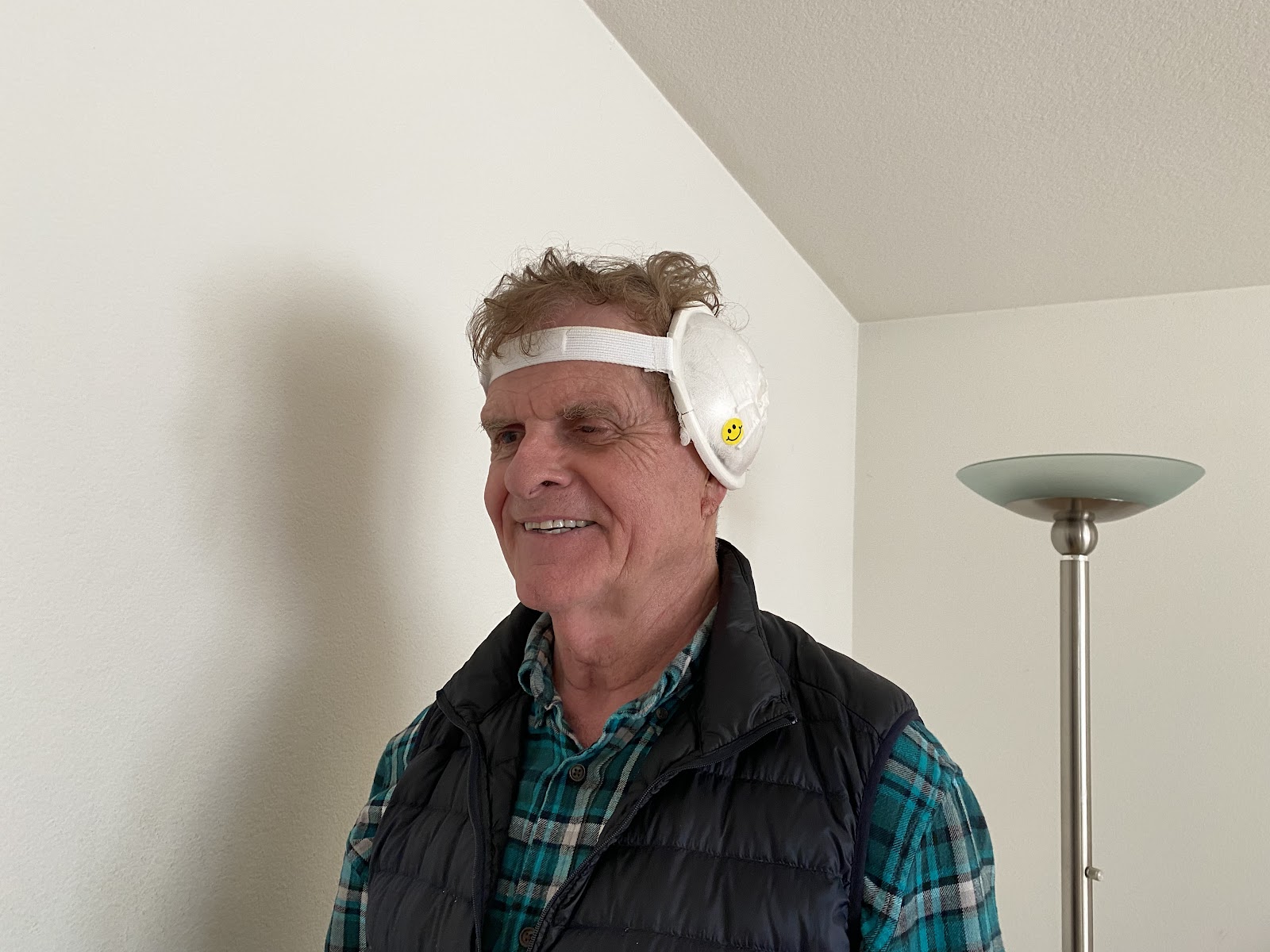
Me Post Cochlear Implant Surgery, 2023


Finally, on March 5, 2023, I visited the VA audiologist and he activated or turned on my CI.  That is, he connected my external sound processor behind my left ear, switching it on.  I was excited, nervous, and a little afraid of being disappointed.When he first spoke the sound processor captured the sound signals and sent them to the receiver implanted under the skin behind my ear.  The receiver sent the electronic signals via implanted electrodes to my inner ear hearing nerve, which then directed the signals to my brain.  

My brain interpreted these signals as intermittent, robotic, tinny sounding static.  It was very different from natural hearing and I knew it would take months of practice, patience, and persistence for the auditory nerve and brain to process the electronic signals it was receiving and transmit them as meaningful speech.  One thing I noticed immediately is how loud I was speaking (as I likely did when I wore hearing aids) and now I find myself slowly starting to talk softer.  My voice also sounded like I was in a deep well.

As my appointment came to an end, I received a huge backpack filled with boxes of CI external electronic equipment and accessories, such as processors, a processor remote control, batteries, battery chargers, a TV streamer with cables, a small microphone, and lots of plastic packages.  All this equipment is to enhance my hearing function and is overwhelming.  I have spent frustrating hours trying to call the company tech help and my son to figure out how to use it.


Me at Cochlear Implant Activation, 2023


How to explain the rehab process?  I have been going through it for six weeks now and my progress toward a goal of being able to hear words clearly through my CI is slow and frustrating.  My brain was very confused in the beginning as it had never heard of using this kind of technology before and it had to learn how to use it.  And unlike hearing aids, getting a CI is not an instant hearing result.  On a scale of one being deaf and ten being perfect hearing, I began at two.  

My initial hearing rehab began at 1-2 hours a day about a week after activation as I needed to train my brain to use this new way of hearing and figure out the electrical equipment.  About an hour a day, I would listen through a Bluetooth iPhone connection to an audiobook and read along with the hard copy.  Each day my wife would read our daily devotional as I read along.  I also watched closed-caption TV.  Gradually, I began to associate the tinny static sound I was hearing with a word or phrase from my memory of those sounds.  The frustration was that the clarity came initially at an agonizingly slow pace and was intermittent.  But I persisted and practiced each day.

At week four I went to see the audiologist for mapping or adjustments to the equipment.  I went into a hearing booth for a CI hearing frequency test and listened to soft sounds, pushing a button when I heard anything.  He compared the results with my pre-CI frequency test audiogram and said my CI ear had improved at the top level he had seen at my post-activation stage.  He adjusted the processor so it sounded a little better.  I’m pretty sure I couldn’t stop smiling.   Actually, I’m not sure I’ve stopped yet.  

In the past few days, I have started doing the rehab with my CI processor on and no hearing aid in the other ear.  By removing my hearing aid, I am forcing my brain to use my CI.  It felt like taking the training wheels off a bicycle. The hearing aid was my safety net. Removing it forced me to depend entirely on sounds that still seemed artificial and unfamiliar. My goal is to be able to go the entire day with only the CI processor on and no hearing aid.

So how long will it take for me to understand speech clearly with my CI alone?  Each person is different but my goal is six months based on other CI recipient experiences.  What I am finding are small plateau improvements.  I hear with only the CI the sound of the wind, and understand many of the daily devotional words, and some TV dialogue without looking at the words or closed captions.  

I still have difficulty understanding telephone conversations, conversations with background noise and conversations in restaurants.  Music is the most difficult for me to hear- both melody and lyrics.  My hope, listening to stories of past CI recipients, is to hear so much better speech and music in these environments.   My admonition to those who decide to get a CI is to adopt a positive mental attitude that you will have success as long as you pursue rehab with patience, practice, and persistence.  To me, I want to improve the quality of my life, interact with my family and granddaughter in group outings, enjoy OLLI and socialize in general. 


Looking back, I learned that cochlear implantation is not really a surgery story. It is a persistence story. The surgery lasted an hour. The rehabilitation lasted months and continues today. Every small improvement came through patience, practice, and persistence. For me, the goal was reconnecting with people, conversations, and activities that make life meaningful.


Editor's note (2026): Since writing this story, I have received a second cochlear implant in my right ear and continue my hearing rehabilitation journey.


Thursday, December 5, 2024

Eulogy For My Very Dear Friend Gene Leong 2023

It was August 5, 2022, and I was riding with our Chain Gang bicycle group of seven on the Rio Hondo bike path to the Arcadia Par 3 golf course.  It was about 11:30 a.m. when I rode through an underpass and saw our Chain Gang leader, Gene Leong, on the concrete bike path unconscious.  He had been about 10-15 seconds ahead of me and there was no obvious sign of what happened.   I stopped and went to him, there was no movement.  I thought the worst had happened, and felt shocked. I moved his bike to the side, the group blocked the path and we called 911.  After about 5 more minutes, Gene moved.  The Paramedics then arrived, and I held Gene’s head as they put on a protective collar and moved him to a mobile cot.  He seemed in and out of consciousness and they took him to the LA County USC Emergency Hospital.  I went through a week of worry and anxiety not wanting to burden the family by seeking updates, hoping he would recover and come back to riding with our group again.  Finally, on August 14 I received a text message from his son that he had passed away on August 13 and it has torn a hole through me and the scar is deep because the love was deep.  Gene was my very dear friend.

There are people you work with or know for years that you never really connect with.  There are others that you connect with as soon as you meet them and a few who become true friends.  Gene’s naturally good, friendly, and open-hearted personality hit it off with me, and we immediately became true friends.

I met Gene by chance one summer day in 2013 in Arcadia, California.  I was retired and had just moved to San Gabriel from the Midwest where I had grown up and spent my professional career. This was California, a place I still had in my mind from the publicized culture here from the ’60s.  I felt apprehensive.   It was in a new city, one I imagined so different from my social and politically conservative roots, and I had no social circle.   I was a bicycle rider and was looking for a local bicycle group to connect with.  I had heard that bicycle riders met at the Arcadia Par 3 golf course to begin rides so I stopped by one day.  I met a group called the Arcadia Amblers that had just finished a bicycle ride to Seal Beach and back.  

Gene was one of the riders and I remember going up to him to ask about his ride.   I was an introvert and passive and usually didn't initiate conversations.  Gene, on the other hand,  was easygoing, warm, and broke the ice with questions about where I was from and my bicycle riding interest and poked fun at the other riders.  He made me feel at ease.  

He invited me to join the bicycle rides of the Amblers and, more personally, a 3-4 rider group called the Chain Gang.   Here I was a new kid on the block, a 68-year-old guy, and he took the lead in making me feel welcomed by the group. All the friendly gestures made me feel appreciated and enabled me to establish very quickly a social circle.   It meant so much to me when he helped me connect with the Chain Gang bicycle group.  He checked with me when I could do a ride before scheduling rides, was always there to introduce me to other riders, and make fun of and joked about me in a humorous, friendly way.  When I didn’t connect for a week or so, he would check how I was doing.  When he had social events like the Fourth of July or Super Bowl parties at his house, he would invite me. 

He and I always roomed together on overnight Ambler and other rides.  And he and his wife, Diana, graciously made me feel at home on several occasions by inviting me to spend the night with them before Gene and I headed out for an overnight ride the next day.  He organized weekly Chain Gang group rides and always liked to eat at the 101 Noodle and Newport Seafood Chinese restaurants after a ride in Arcadia.  Our group fell in love with Chinese food and we all agreed to support his preference.

In my eyes, Gene lived a very rich life.  His care and love of others flowed naturally to family and friends.  He enriched my life, subtly by example.  On our Ambler and Chain Gang rides and overnight stays together he connected lovingly with his family by daily texts, emails, and calls.  He loved to talk about the proud accomplishments of his sons, his daughter, and later his grandson.  He connected the same way with friends, always kind, open, and accepting.  My wife and I socialized with Gene and Diana and they made us feel very naturally comfortable with any groups we socialized with.


Gene and I were similar age and I consider our almost 10 years of friendship in LA an old friendship. You can’t grow old friends, an old friend likes to remind me, and he’s right.  The thing about old friends is not that they love you but that they know you.

I grew up in a culture that encouraged males, especially in sports, to suppress emotions-  an ethos of “don’t let them see you sweat.”  In Vietnam, we avoided dealing with the loss or wounding of a close friend by turning away and saying mostly to ourselves with a stone face ... “It don't mean nothin`”.  Looking back, I just did not know how to comprehend the loss.  My corporate law career just reinforced that ethos of repressed emotions. 

Gene’s death has challenged my feelings of impenetrability.  I never want to again get used to such a loss.  The scar makes me uncomfortable, but I feel alive.  The scar is a testament to the love and the relationship that I had for and with him.  The scar is a testament to life; a testament that I loved him deeply, was cut deeply, and that I can heal.  And the scar tissue is stronger than the original flesh ever was. 

I enjoyed a true, deep friendship with Gene that I can never lose.  But losing such a good friend who knew me feels like I am burying a part of my life.  That part is gone with him but not the comfort and memories of having such a good friend.  

I sure miss you buddy,  may you Rest In Peace Gene.

CLOSING COMMENT-  Writing and reading his story has been good therapy and a good closure for me and I hope it gives some comfort to family and friends.


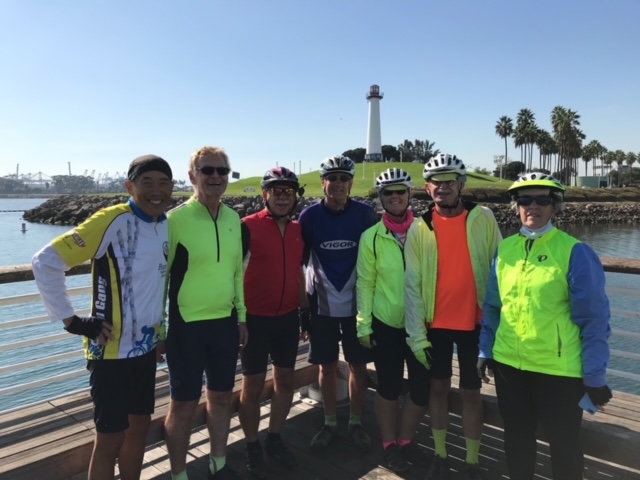
My Dear Friend Gene Leong on Left With Chain Gang at Long Beach Lighthouse November 2021


  Gene Leong- 1946-2022

Tuesday, December 3, 2024

My Heart Story 2023


When I think of someone having a heart attack it is always that image of someone grabbing their chest and falling to the ground, it’s never merely a pain near the left armpit and extending to the fingers, which is what it was for me.  I didn’t really think this was ever going to happen to me.

Two weeks ago on Tuesday, February 14, 2023, I woke up at about 11:30 pm with that pain in my left armpit and arm.  I got up thinking it may have been arthritis or some muscle or nerve pain from the day's activity.  My blood pressure and total cholesterol are low, I am fit, exercise regularly, eat healthily and I have never had a heart issue or seen a cardiologist.  I took an aspirin which didn’t affect the pain and then it hit me- heart attack.  About midnight I awoke my wife Vicki.  We talked about my symptoms and decided she would drive me to the Los Alamitos Health Center Emergency Room five minutes from our home rather than call 911.  I checked in to the ER around 12:30 am telling an ER staff member that I had pain in my left armpit and left arm, and said I was concerned these were possible heart attack symptoms.  My wife accompanied me. 

After hours in an overcrowded emergency room, a normal EKG, stress test, and ultrasound suggested I was probably fine. Yet my elevated cardiac enzymes convinced the cardiologist to order an angiogram.

Suddenly about 1:30 pm on Wednesday I was wheeled out of my ER room and into (and presumably admitted to) a hospital room. The angiogram nurse came by at about 3:30 pm and explained the test and said I would stay in the recovery room at least 2 hours after the procedure, although the total time was unknown due to possible stents.  The cardiologist performed the angiogram and as I gained consciousness told me I had a 90% blockage of my right coronary artery and a 50-60% blockage to my left coronary artery.  That is the moment when my life changed. As I looked at the screen showing the blocked artery and the newly opened artery after the tent, I realized how close I had come to catastrophe. For the first time in my life, I truly felt vulnerable.

Heart problems remain the No. 1 health threat to American adults. Heart disease is the leading cause of death in both men and women in the United States, accounting for about 1 in every 4 deaths each year.  My heart disease was a wake-up call that I needed to make some changes in my life.  I now know through an experience that allows no doubt that my health is only as good as the health of my heart.  Diet, lifestyle, age, and hereditary factors can all impact my performance and my quality of life, and eternal vigilance on factors I can control- diet, exercise, sleep, and stress- is now my destiny.

The cardiologist saw me at 9:30 am on Thursday and said he now felt I should get a stent in the next few weeks to unblock the left side artery but said I was cleared to go home, which I was finally able to do about 3:30 pm.  

The experience also taught also taught me the importance of having an advocate. Throughout the process, Vicki asked questions, tracked information, and helped me navigate an unfamiliar and sometimes confusing medical system.

I am now focused on heart disease as my maternal grandfather died of coronary artery disease and my mom had triple bypass surgery before dying of the same disease at age 89. Whether Covid contributed, I will never know. What I do know is that my family history clearly placed me at risk. But most important to me is not the heart attack. It is the realization that life can change in a single day. I entered the hospital believing I was healthy and would leave with reassurance. Instead, I left with a stint, a new appreciation for my wife, a deeper awareness of my own mortality, and gratitude for every day I have been given since.


Saturday, January 20, 2024

The Good Samaritan 2023

Recent scams, thefts, and crimes against seniors had made me increasingly suspicious of strangers. My own recent experience seemed to add to that suspicion.  Last October 2022 I parked my car at the Long Beach El Dorado Nature Center for a regular walk with my wife.  When we returned to the car, we found someone had used a device to pry open the front door and steal 5 credit cards and some cash from my wife’s hidden purse.  The thief had used or tried to use all 5 cards within 30 minutes of when we returned to the car.  I filed a police report but got no help from the police.   I took my car to the Acura dealer for door lock repair and the dealer representative said he had 3 other customers in the last 48 hours with the same break-in.  Experiences like my wife's theft and the constant reports of scams had left me more suspicious of people than I wanted to be.

Then something happened which has shaken that apprehension in a very good way.  Friday morning, May 26, 2023, my friend and I met at my house for a bicycle ride to the Long Beach harbor lighthouse. We first rode to Seal Beach and stopped at Bogart’s coffee shop where we bought a cup of coffee.  Then it was on to the Long Beach Lighthouse near the Aquarium of the Pacific.  I remembered I had forgotten to bring an energy bar so I stopped at a small convenience store next to the Aquarium to buy one.  As I tried to pay with my debit card, the clerk said there was a $.50 charge for the card so I got my bike packet from my biking jersey pocket, put my card back and paid $3.00 cash.  

After a short rest break we rode to a Greek restaurant in Seal Beach for lunch.  As I reached for my bike packet, it wasn’t there.  Thoughts started flying in my mind.  I suspected I had dropped it at the convenience shop and began speculating about what might be happening.  Someone was using my debit card to buy stuff or worse using it to access my checking account.  Or someone just took the $35.00 I was carrying in cash and pitched the packet which could have exposed my personal identity information. No positive thought came to me as I have lost a lot of trust in human decency with recent reported negative  changes in society’s morals.  Immediately I phoned my bank and canceled and deactivated the card and beat myself up mentally for being so careless.  Another example of Murphy’s Law of carelessness and bad consequences.

I could not get the bike packet loss out of my mind so after the ride I drove 11 miles (35 minutes) to the shop near the Aquarium and the kid working there said no one had turned in any lost items on Friday.  I resigned myself to the loss, sucked it up, and thought it was luckily a small loss compared to my wife’s recent loss.  I put it out of my mind, except to admit my careless lapse to my wife.  After our experience with the car break-in, we accepted a repeat experience.

Saturday morning after breakfast we read Our Daily Bread devotion titled Small but Great and quoting Zechariah 4:10. “Who dares despise the day of small things?”  Unexpectedly what happened in the next moment showed the application of this teaching.  After the devotion, my wife said she was going to the mailbox to leave some letters.  I then went upstairs to shave when all of a sudden I heard my wife run upstairs saying guess what I found, guess what I found. She pounded on the door and I thought she had a winning lottery ticket.  When she showed me the packet that I lost, I paused for a few seconds in disbelief and said wow, where did you find it. For a few moments I just stared at it. I could hardly believe what I was seeing. After all the stories about theft, and dishonesty, someone had gone out of their way to help a complete stranger. She told me she had found it in the mailbox, with my debit card, cash, and photocopy of my driver’s license, Medicare, and Medicare Supplemental cards I had in my packet.  No note.  

Someone had found my bike packet at or near the convenience shop, had looked at the photocopy of my address on my driver’s license, and in an act of kindness had driven 11 miles to my house and left the packet intact in my mailbox.  Wow!  No cash was missing and instead of turning it over to someone, the person was a true Good Samaritan, went above and beyond, and brought it to me.  We said Praise the Lord because that was the last thing either of us could imagine someone doing.  How could I ever express my gratitude for such a kind and caring act?  

The person who returned my packet will probably never know the impact of that small act of kindness. They not only returned my cards and cash; they restored a little of my faith in people. In a world where we hear so much about dishonesty and selfishness, they reminded me that good people are still out there quietly doing the right thing when no one is watching.


Friday, January 5, 2024

Small Moments (1958-2014)


Looking back over my life, I can identify a handful of moments that quietly changed its direction. At the time they seemed like isolated events- a football injury, a cancer diagnosis, hearing loss. Only later did I realize each one marked the end of one chapter and the beginning of another.

I distinctly remember starting to watch sports on television in the middle to late 1950s. My interest in professional football was piqued. I'm not sure what first drew me to the Baltimore Colts—maybe it was the horseshoe on the helmet, maybe it was the way Johnny Unitas played the game. Regardless of what it was, the logo and the initial letter of his last name were inextricably linked in my mind to the man who was one of my football heroes.  He set throwing records, guided his club to NFL championships, and always seemed to pull his team through with amazing last-second scoring drives. I later watched every Green Bay Packers game in 1960 when a sophomore in high school in Madison, Wisconsin. My new football idol was their quarterback Bart Starr, who helped his squad win five NFL championships. To play quarterback like Johnny Unitas and Bart Starr was my childhood ambition.

Before my junior year of high school, my time arrived in the summer of 1961.  To train and fight for the starting high school quarterback position, I moved to Lafayette, Indiana by myself (before my family arrived in September) and lived with my aunt and uncle.  I was inspired by watching quarterbacks Unitas and Starr succeed after putting in a lot of effort and commitment. 

That summer, I completely focused on running, throwing the football, and learning the quarterback position.  My name was listed in the newspaper as the starting quarterback for the first game on a Friday night in August after outworking my rivals. It was a moment of unimaginable glory.  On defense, I also started as a safety.  I made a tackle on the opening play of the second quarter, and the next thing I remember is waking up on a Saturday morning in the intensive care unit of a nearby hospital in Lafayette, Indiana.  After my recovery, I saw the team doctor a week later.  He warned me that another concussion could cause lasting brain damage but said it was my choice whether to continue playing.

Although my parents let me choose whether or not to play football, the worry I noticed on their faces caused my heart to skip a beat.  The glory of being a high school quarterback was finished, and I immediately realized that my dream of playing was also over. I had no dream of a backup.

Looking back, that particular post-injury experience taught me a lot.  Over the following year, I recall learning the term "restriving" and considering my options.  I suddenly had the idea to model my behavior after my older brother Steve, who excelled in both academics and extracurricular activities while attending college.  My attention shifted to my GPA and activities.  I achieved academic success and was chosen as senior class president.  I ultimately decided to enter the legal profession after Steve.

Nearly forty years later, another small moment would again change how I saw my future. Another event I vividly recall was during a visit to my doctor in Atlanta in 2000. He informed me that my PSA test result from prostate cancer screening was 11- a 50% possibility that I had prostate cancer.  I soon got a biopsy, and the results showed that I had medium-grade prostate cancer with a Gleason score of 7.  I was in the prime of my legal career at age 55 and good health.  My initial response to learning I had prostate cancer could best be summed up as shock and emotional numbness.  Nobody in the family or a close friend had cancer.  My cancer was ruled by the Veterans Administration as caused in Vietnam by Agent Orange.  Therapeutic options included hormone therapy, radiation therapy, implants, and prostate removal.  The worst-case scenarios included death, impotence, or incontinence.

When I found that several of my acquaintances had prostate cancer, I went into crisis mode and contacted them to explore my alternatives.  I decided I wanted to have the surgery to remove my prostate after lengthy discussions with my oncologist surgeon and acquaintances.  I had PSA testing every year to confirm the operation went successfully, but it would take more than five years of yearly PSA tests to guarantee that the disease had not gone elsewhere.

The news that I had cancer affected how I saw both my work and myself.  My level of enjoyment at work decreased.  I had always found order, purpose, and fulfillment in my work.  I truly appreciated the feeling of making a difference, and winning the case, and found pleasure in the social interaction process.  Work started to drain me once I was given the cancer diagnosis—meetings, reports, budgets, and office political issues.  Work turned more and more into just dollar and cents calculations.  The words feeling alive and a zest for life took on importance as my mortality awareness was heightened a lot.   I lost my gut motivation for work and took early retirement in 2002.  I had not planned for life in retirement and have spent my time since then trying to figure it out.

Until 2014, I went through life believing that my hearing was good (or at least adequate), even when input from friends and my environment began to show me otherwise.   I resisted utilizing hearing aids out of self-consciousness and because I thought they would make me appear older and be too expensive, difficult, and uncomfortable.  However, I soon realized that my resistance was making me appear older because I had to keep asking people to repeat themselves.  I was also beginning to isolate myself and retreat from social group activities, and I realized that was not the best course of action for a happy life.

I then discovered that the Veterans Administration provided coverage for hearing aids.  I quickly scheduled a consultation with a VA audiologist at the Santa Ana Clinic.  She informed me that I needed hearing aids because my hearing loss was moderate in my right ear and somewhat worse in my left.  

I recall the moment I received my hearing aids.  My 68 years of age registered.   For the first time, I truly felt old. Not because of a number, but because I needed help doing something I had always taken for granted. I started to glance around and notice people wearing hearing aids, which gave me the impression that I wasn't the only one having issues. I also developed my patience and my capacity to control my irritability.  While I could hear those around me talking, I had difficulty hearing in crowded places like restaurants.  I picked up the habit of politely asking individuals to speak slowly, clearly, and twice.

Looking back, none of these moments seemed significant when the day began. A football game, a doctor's appointment, a hearing test. Yet each altered the course of my life. They taught me that life rarely changes all at once. More often it changes at a single moment that we do not fully understand until years later. These moments taught me resilience, gratitude, and an appreciation for how precious and fragile life really is.


Monday, January 1, 2024

Eulogy For My Dad Lester Smith (1915-2012)

Lester Smith

May 4, 2013


So today we gather to honor the memory and legacy of this man- my father, Les Smith, “Green Pasture Smith" as he was known during his working years- to celebrate his life, and for part of my time today, to focus on the fraternity he loved.  His life touched us all ... in ways we may not fully realize … his kindness, generosity, his wisdom, and his goodness- strong, steadfast, and true ...   

But what makes a person the way they are … what circumstances … what combination of factors … is it fate … is it destiny … is it genes? … Whatever the immediate reason, I like to think it is God’s hand at work …

Today I will share my perspective on a few of those factors that helped shape the person he would become … One of the most important, without question, was the Alpha Gamma Rho fraternity.

Dad in his heart, and in his soul was a farmer, and he exemplified all the best qualities of a farmer … self-reliance … work ethic … frugality … strength … confidence … he was independent … he was patient … he was generous … Always had a kind word … He thought the best of people … He loved his family, his church, his community, and his country, And he loved his fraternity, Alpha Gamma Rho. 

There is something about farming … working the land to earn a living, I believe, that nurtures these qualities … The cycles of work, the cycles of life.

There’s the steady rhythm of the daily cycle … early to rise … feeding animals … tilling the soil … the well-earned rest at day’s end … The farmer learns the importance of reliability, discipline, and perseverance …

And there is the cycle of the seasons … at once predictable, yet still mysterious … The farmer learns the importance of commitment, of steadiness … but also learns that to survive he must be creative … And he learns to love nature, and his community … He understands that ownership means stewardship … that freedom means responsibility.

Then there are the cycles of the weather … Its risks and uncertainty … too much rain … too little rain .. hail … insects and disease … an early, killing frost … this gives farmers respect for a higher power … God almighty … Some call this humility.

But these cycles also are a source of hope and faith … No matter how bitter and cold the Winter … life will be renewed by the reassuring warmth of Spring.

Necessity, conviction, and courage create action … Actions create habits ...And habits create character … Dad was a man of character … I feel Dad’s way of living is well described by a label he acquired from his work- Green Pasture Smith.  The label described Dad’s pure motives and principles- always focused on doing his part to make this a better place to live, whether it was research and education applied to agriculture, or seeking the best from his family and others.  I never wavered in my respect for his solid foundation and highly regarded the standards he lived by.  Dad wanted me to do my very best … whether I was a student, a soldier, or in the work world.  He wasn’t flashy … he was a man of substance.  His word was his bond.  He was dependable and loyal.  What you saw … what you heard … is what you got.  But all our testimonials are but a pittance compared to the years of dedication doing his duty as a husband, father, neighbor, friend, mentor, or as an extension agronomist in the field of agriculture.  Dad did his job and I now want to speak for a moment about a legacy our family has established to honor his memory.  

Once facing the economic turmoil of the Great Depression, Dad understood the financial demands of a college education.  Though times today are challenging for college students, Dad always felt Alpha Gamma Rho could be a man’s ticket to lifelong success. 

More than 75 years ago, Dad had little to no resources for attending college at the University of Maine.  In his sophomore year, he was forced to live in what has been described as a chicken coop near the campus.  One morning he headed into the woods for a hunting trip where he unexpectedly met several AGR members.  He emerged from his trip with many new AGR brothers and a job in the chapter’s kitchen that would pay his way through college.

Dad retired from Purdue University and his lifelong achievements can, in large part, be credited to that hunting trip in 1933  where his lifelong commitment to AGR began.

In honor of Dad’s lifetime commitment to inspiring excellence, our family has created the Lester Smith Scholarship to offer financial assistance to deserving AGR undergraduates at the University of Maine and Purdue University.

The scholarship -current total principal has now grown to approximately $10,000- will award approximately $3,000 to a recipient selected in the fall of 2013 and will be applied toward the 2013-2014 school year.  Perpetuation of the scholarship beyond three years will be determined at a later date.  The National AGR Educational Foundation in Kansas City will distribute the applications and determine a selection committee.  

Dad was initiated into the Alpha Gamma Rho fraternity on January 14, 1935.  If I can condense from AGR’s website, the purpose of AGR is to make better and broader men in the field of agriculture focusing on improving their mental, social, moral, and physical development through fellowship in a national fraternity.  He received his bachelor's degree in 1937 and his master’s degree in 1938 at the University of Maine.  He began his career as a an extension agronomist for the University of Vermont in 1938.  With the help of a Hoods Dairy Scholarship, he began working on his Ph.D. at the University of Wisconsin.  In 1954, he was hired by Purdue and retired in 1979. 

The scholarship and Dad’s legacy are to encourage men to turn to AGR for the connection to a broader world of agriculture and a lifetime of professional success.  But what will recipients of his scholarship do with this legacy?  Will they make a difference in the lives they touch?  Will they make a difference in our society and our great country?  That’s what dad really lived for … to cause us to make a difference.

We love you and miss you, Dad.  We know you are with the Lord. 

.